



Makeup
Small order
Bulk order
Field:Value
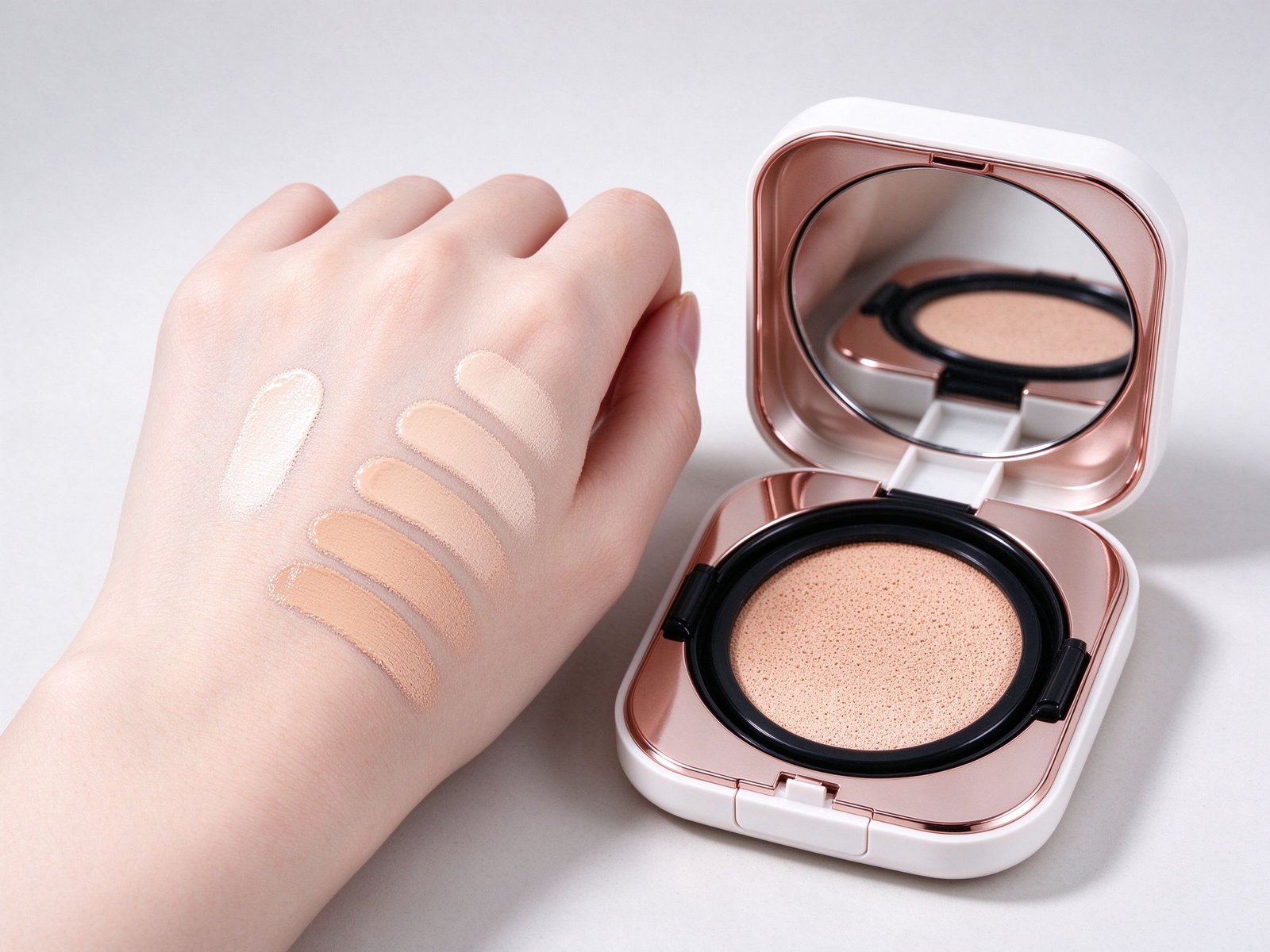
Product Type:Cushion Foundation
Material / Format:Liquid-impregnated sponge core (refillable)
Capacity:15 g (includes replacement refill core)
Size:To Be Confirmed
Weight:To Be Confirmed
Color / Shades :#13–#23 light-to-medium start, extending to deeper shades (8–12 shades)
Packaging:Cushion case + puff + replacement refill core; ABS / acrylic case
MOQ:Small batch 3,000 pcs / Bulk ≥5,000 pcs
Customization:Shade, formula, label, logo, case, refill configuration
OEM:Yes
ODM:Yes
Private Label:Yes
Application:Face base; oil-control, long-wear, humid-tropical wear
Product Details
Wholesale Cushion foundation: Sourcing Guide for B2B Buyers
If your business buys cushion foundation, this sourcing guide from LIUHAO GLOBAL explains how to get them made in China efficiently. Our Makeup programme works with audited factories and handles supplier vetting, sampling, quality inspection, and consolidated shipping for B2B buyers worldwide. Below you will find practical detail on specifications, customisation, MOQ, pricing, and delivery. Start with the Makeup category to see the current range.
Full Description : Cushion foundation is a high-ticket, high-margin base product and one of the strongest performers in humid-tropical climates, where long-wear and oil control are everyday needs. LIUHAO GLOBAL supplies it as a complete OEM/ODM and private-label program for beauty brands, importers, distributors, e-commerce sellers and OEM/ODM buyers, drawing on China’s Guangzhou Baiyun colour-cosmetics cluster.
The product is a liquid foundation soaked into a sponge core, supplied at 15 g with a cushion case, puff and a replacement refill core. The outer case is ABS or acrylic and can be customised. The shade range starts at light-to-medium tones (#13–#23) and extends to deeper shades, typically 8–12 shades per line, delivering oil control, long-wear and natural, non-heavy coverage suited to regional skin tones and humid-tropical wear.
Buyers can choose ready formulations or commission custom shades, case finishes and refill configurations, with full private labelling handled end-to-end. Sourcing and supplier confirmation are in progress; MOQ, shade count and final specification are confirmed on request. As your one China sourcing partner, LIUHAO GLOBAL coordinates factory matching, sampling, quality checks and export documentation.
Key Features :
- Format: liquid-impregnated sponge core, refillable
- Capacity: 15 g (includes replacement refill core)
- Packaging: cushion case + puff + replacement refill core; ABS / acrylic case (customizable)
- Wear: oil-control, long-wear, humid-tropical wear, natural non-heavy coverage
- Shade strategy: light-to-medium shades (#13–#23) extending to deeper shades for diverse global skin tones (8–12 shades)
- Customization: Custom shade, custom formula, logo printing, custom label, custom case, refill core configuration (To Be Confirmed)
- OEM: Yes
- ODM: Yes
- Private Label: Yes

Product Overview: Cushion foundation
Cushion foundation in the B2B context are commercial-grade products supplied in wholesale quantities for resale, branding, or business use. Unlike retail purchases, items sourced through LIUHAO GLOBAL come from factories that produce at scale, with consistent specifications between production runs. Buyers typically order them to fill distribution catalogues, supply retail chains, or support private-label brands. Every order is quoted on specifications, quantity, and destination, so two buyers ordering the same product line can receive different pricing based on their requirements.
Types and Variations
Common configurations of cushion foundation vary by structure, size, material, and finish. Most buyers shortlist two or three variants before requesting samples, then narrow to one for their first production order. Popular variations include entry-level options for price-sensitive channels, mid-range versions with better materials, and premium versions where finishing and packaging justify a higher retail price. Ask us for the current catalogue — available options change as factories introduce new structures and materials each season.
Materials and Manufacturing
Material consistency is a common quality issue in cushion foundation production. Between production runs, factories may substitute suppliers for raw material, which can shift colour, weight, or texture. Our team locks the material specification in writing before production and checks incoming material during inspection, so the cushion foundation you receive in the third order match the approved samples from the first.
Customisation and OEM Options
OEM and ODM projects for cushion foundation are welcome. Buyers can customise materials, colours, sizes, and structural details, with private-label branding applied at the factory. Most custom cushion foundation projects start from an existing factory model with modifications, which keeps tooling costs low; fully bespoke designs are possible with longer lead times. Share your specifications and target quantity via the contact page and we will confirm what is feasible within your budget.

MOQ and Pricing Structure
MOQ for cushion foundation depends on the model and level of customisation. Standard versions carry lower minimums because factories run them regularly; customised options require larger commitments to justify line changeovers. First-time buyers often start at the standard MOQ to test market response, then move to volume pricing on repeat orders. Because MOQ is quoted per specification, confirm it in writing before planning your cash flow around an order.
How to Request Samples
Never skip sampling on a first order. The sample stage is where material grade, colour, finish, and packaging are verified against your expectations, and where changes are cheapest to make. For customised cushion foundation, request a pre-production sample from the actual production line rather than a showroom sample. Our team photographs and documents each approved sample so the specification is unambiguous at inspection time.
Quality Control and Inspection
Quality control for cushion foundation orders includes in-line checks during production and a final random inspection before dispatch. The inspection samples units against the approved reference and checks appearance, function, dimensions, and packaging. Buyers receive a photo report with pass or fail findings. If issues are found, corrective action happens at the factory before goods ship — far cheaper than resolving complaints after delivery.

Packaging and Labelling
Packaging for cushion foundation is specified at order stage: individual polybags, inner boxes, and master cartons, with or without retail-ready presentation. Export cartons are sized for container efficiency, and carton markings can carry your handling instructions. Confirm packaging expectations in the specification sheet, because packaging changes after production starts are disruptive and costly.
Shipping and Delivery Terms
Shipping for cushion foundation orders runs by sea freight, air freight, or courier depending on urgency and volume. Sea freight suits most B2B quantities; air freight covers urgent replenishment. Buyers consolidating cushion foundation with other product lines in one shipment reduce per-unit freight meaningfully. Incoterms — usually FOB, CIF, or DDP — are confirmed in the quotation, and we prepare the packing list and commercial invoice for destination clearance.
Compliance and Documentation
Compliance documents depend on the destination market. Common requests include material test reports, product certifications, and country-of-origin documentation. Because requirements differ by market and product category, confirm what your importer or retailer requires before production starts. We coordinate with factories to obtain the correct cushion foundation documentation for your destination.
How LIUHAO GLOBAL Works with Buyers
Working with LIUHAO GLOBAL on cushion foundation follows a simple division of labour: you own the requirements and the market; we own the factory interface. Your team sends the brief, we confirm feasibility and pricing, then we manage sampling, production, inspection, and shipping with daily accountability. Buyers use this model to scale product ranges without hiring China-based staff.
Quality Grades and Price Tiers
Quality grades for cushion foundation usually map to price tiers: an entry grade for promotional channels, a mid grade for mainstream retail, and a premium grade where materials and finishing support higher positioning. The right grade depends on your shelf price, not on abstract quality. Tell us your target retail price and we will propose the grade that fits the margin.
Lead Times Explained
Lead time for cushion foundation covers sampling, production, and shipping separately, and each is quoted independently. Production for standard models is typically faster than for customised versions, and peak season extends everything. When planning launches or promotions, ask for the current production schedule before committing dates to customers — factory lead times move through the year.
Payment Terms and Buyer Protection
Payment terms for cushion foundation typically follow a deposit-and-balance structure, with the balance due against shipping documents. For repeat buyers, terms can be reviewed after order history is established. Avoid full prepayment on first orders with any supplier; the deposit structure exists precisely to keep both sides committed. All payment details for your cushion foundation order appear on the proforma invoice before any money moves.
Factory vs Trading Company
Factories offer lower unit prices but narrower catalogues; trading companies offer range and consolidation but add a margin. For cushion foundation, the right choice depends on your team’s ability to manage a factory directly. Most B2B buyers work with a sourcing partner like LIUHAO GLOBAL precisely because managing production remotely — in another language and time zone — absorbs staff time better spent on sales.
Seasonal Planning and Restocking
Seasonal planning matters because factory capacity tightens around holiday production peaks. Buyers who place cushion foundation orders outside peak season get better scheduling attention and often better pricing. For seasonal retail, work backwards from your on-shelf date: production time, shipping time, customs clearance, and domestic distribution together define the latest sensible order date.
Global Shipping and Import Notes
LIUHAO GLOBAL is based in Hong Kong, at the centre of global trade routes, and serves B2B buyers worldwide. Importing cushion foundation from Chinese ports keeps freight flexible: sea freight for cost efficiency on long lanes, air freight when speed matters. Most shipments clear customs smoothly when documents are complete. Confirm import duty and tax treatment in your market with your customs broker, because classification and valuation determine what you pay at the border.
Typical Order Timeline
A typical cushion foundation order moves through six stages:
- Requirement brief and quotation — you confirm cushion foundation specifications, quantity, and destination.
- Sample approval — factory produces and ships samples; you approve in writing.
- Deposit and production slot — order enters the factory schedule.
- Production and in-line checks — material and process verified during the run.
- Final inspection — AQL sampling against the approved cushion foundation reference.
- Balance payment and shipping — documents prepared, goods dispatched, tracking shared.
Cost Factors for Cushion foundation Quotes
When comparing cushion foundation quotes, check these cost lines:
| Cost factor | What it changes |
|---|---|
| Quantity tier | Unit price drops at volume breakpoints |
| Material grade | Higher grades raise cost and durability |
| Customisation level | Printing, tooling, and structural changes add setup cost |
| Packaging format | Retail-ready packaging costs more than export packing |
| Inspection and testing | AQL inspection and lab tests are quoted separately |
| Freight mode | Sea, air, or courier changes landed cost sharply |
| Incoterms | FOB, CIF, and DDP shift different costs to buyer |
| Exchange rate | Quotes are pegged to a rate and validity date |
Common Mistakes When Sourcing Cushion foundation
Common mistakes with cushion foundation orders: choosing a supplier on unit price alone, skipping written specifications, assuming packaging is included, and planning cash flow around an unconfirmed lead time. Each of these creates disputes that cost more than the money saved. The fix is procedural, not expensive: specification sheet, approved sample, and inspection report — three documents that prevent most sourcing problems.
Frequently Asked Questions
What is the MOQ for cushion foundation?
MOQ depends on the model and customisation level. Standard cushion foundation carry lower minimums; customised versions require larger commitments. We confirm MOQ in writing with every cushion foundation quotation.
Can I get samples before ordering?
Yes. Samples are arranged after specifications are confirmed, with fees usually credited against the production order. Written sample approval is our standard process.
Can I put my own brand on cushion foundation?
Yes — OEM and private-label options cover logo printing, colour matching, packaging, and structural changes for cushion foundation. Each project is quoted from your specification.
How is quality controlled?
In-line checks during production plus an AQL final random inspection against the approved cushion foundation sample, with a photo report issued before balance payment.
What about shipping and documents?
Sea, air, or courier per your urgency; Incoterms confirmed at quotation. Packing list and commercial invoice are prepared for shipments to your destination.
Every figure in this guide describes process and structure rather than a fixed promise: specifications, quantities, and destination markets all shift what a {kw} project looks like in practice. Treat the numbers as planning inputs and confirm current values with a written quotation before committing budget.
Documentation keeps a {kw} order predictable: a specification sheet that defines the product, a signed sample that fixes the standard, and an inspection report that proves the outcome. Buyers who maintain these three documents rarely face the disputes that consume unprepared teams.
Communication cadence matters as much as process. During a {kw} production run, our team sends updates at each milestone — material readiness, line start, mid-run checks, and inspection — so decisions are made with current information rather than assumptions about progress.
Consolidation is the quiet lever in China sourcing. Combining {kw} with other product lines in one shipment spreads fixed freight and handling costs across more goods, and often lifts a small order into a better freight tier. Plan product ranges with consolidation in mind from the start.
Related Products and Next Steps
Related sourcing options: this related product and this one, and the wider Makeup category. For background on the product category, see the overview on Wikipedia. Request a quote via the contact page.

Frequently Asked Questions
Sourcing request: B2B Sourcing Guide
This guide answers the practical questions B2B buyers ask about sourcing request when sourcing from China. LIUHAO GLOBAL publishes this knowledge base to help importers, distributors, and brand owners plan purchases with accurate expectations. The article covers definitions, typical numbers, process steps, and common pitfalls around sourcing request. More guides are available in the FAQ section.
Starting a sourcing request is simple. Send us the product you are interested in with as much detail as possible — product name or image, specifications, target quantity, quality requirements, packaging, target price, destination country, and customization needs. The more detail you provide, the easier it is to explore suitable options

Product Overview: Sourcing request
Sourcing request in the B2B context are commercial-grade products supplied in wholesale quantities for resale, branding, or business use. Unlike retail purchases, items sourced through LIUHAO GLOBAL come from factories that produce at scale, with consistent specifications between production runs. Buyers typically order them to fill distribution catalogues, supply retail chains, or support private-label brands. Every order is quoted on specifications, quantity, and destination, so two buyers ordering the same product line can receive different pricing based on their requirements.
Types and Variations
Common configurations of sourcing request vary by structure, size, material, and finish. Most buyers shortlist two or three variants before requesting samples, then narrow to one for their first production order. Popular variations include entry-level options for price-sensitive channels, mid-range versions with better materials, and premium versions where finishing and packaging justify a higher retail price. Ask us for the current catalogue — available options change as factories introduce new structures and materials each season.
Materials and Manufacturing
Materials determine cost, durability, and how sourcing request present on a retail shelf. Factories normally offer two or three material grades for the same sourcing request design, and the price gap between grades can be significant at volume. Confirm which grade is quoted before comparing prices between suppliers, because a lower quote often reflects a lower material grade rather than better value.
Customisation and OEM Options
OEM and ODM projects for sourcing request are welcome. Buyers can customise materials, colours, sizes, and structural details, with private-label branding applied at the factory. Most custom sourcing request projects start from an existing factory model with modifications, which keeps tooling costs low; fully bespoke designs are possible with longer lead times. Share your specifications and target quantity via the contact page and we will confirm what is feasible within your budget.

MOQ and Pricing Structure
Pricing for sourcing request is tiered by quantity, and the jumps between tiers are often substantial. A quote that looks expensive at the minimum quantity can become competitive one tier up. When budgeting, request pricing at two or three quantity levels so your team can see where the breakpoints sit. Payment terms — typically a deposit with balance against shipping documents — are confirmed with each quotation.
How to Request Samples
Samples of sourcing request are arranged before mass production so both sides approve the exact specification. The process is simple: confirm the model and customisation, pay the sample fee, and receive the sample within one to two weeks in most cases. Sample fees are usually credited against the production order. Approve samples in writing, including packaging, because the approved sample becomes the reference standard for the pre-shipment inspection.
Quality Control and Inspection
Every sourcing request order above trial size should be inspected before it leaves China. Our standard inspection for sourcing request uses the AQL sampling method: a defined sample size drawn from the total quantity, checked against the approved specification, with defects classified as critical, major, or minor. You receive the report before balance payment, which keeps commercial leverage where it belongs — with the buyer.

Packaging and Labelling
Packaging for sourcing request is specified at order stage: individual polybags, inner boxes, and master cartons, with or without retail-ready presentation. Export cartons are sized for container efficiency, and carton markings can carry your handling instructions. Confirm packaging expectations in the specification sheet, because packaging changes after production starts are disruptive and costly.
Shipping and Delivery Terms
Shipping for sourcing request orders runs by sea freight, air freight, or courier depending on urgency and volume. Sea freight suits most B2B quantities; air freight covers urgent replenishment. Buyers consolidating sourcing request with other product lines in one shipment reduce per-unit freight meaningfully. Incoterms — usually FOB, CIF, or DDP — are confirmed in the quotation, and we prepare the packing list and commercial invoice for destination clearance.
Compliance and Documentation
Compliance documents depend on the destination market. Common requests include material test reports, product certifications, and country-of-origin documentation. Because requirements differ by market and product category, confirm what your importer or retailer requires before production starts. We coordinate with factories to obtain the correct sourcing request documentation for your destination.
How LIUHAO GLOBAL Works with Buyers
Working with LIUHAO GLOBAL on sourcing request follows a simple division of labour: you own the requirements and the market; we own the factory interface. Your team sends the brief, we confirm feasibility and pricing, then we manage sampling, production, inspection, and shipping with daily accountability. Buyers use this model to scale product ranges without hiring China-based staff.
Quality Grades and Price Tiers
Quality grades for sourcing request usually map to price tiers: an entry grade for promotional channels, a mid grade for mainstream retail, and a premium grade where materials and finishing support higher positioning. The right grade depends on your shelf price, not on abstract quality. Tell us your target retail price and we will propose the grade that fits the margin.
Lead Times Explained
Lead time for sourcing request covers sampling, production, and shipping separately, and each is quoted independently. Production for standard models is typically faster than for customised versions, and peak season extends everything. When planning launches or promotions, ask for the current production schedule before committing dates to customers — factory lead times move through the year.
Payment Terms and Buyer Protection
Payment terms for sourcing request typically follow a deposit-and-balance structure, with the balance due against shipping documents. For repeat buyers, terms can be reviewed after order history is established. Avoid full prepayment on first orders with any supplier; the deposit structure exists precisely to keep both sides committed. All payment details for your sourcing request order appear on the proforma invoice before any money moves.
Factory vs Trading Company
Factories offer lower unit prices but narrower catalogues; trading companies offer range and consolidation but add a margin. For sourcing request, the right choice depends on your team’s ability to manage a factory directly. Most B2B buyers work with a sourcing partner like LIUHAO GLOBAL precisely because managing production remotely — in another language and time zone — absorbs staff time better spent on sales.
Seasonal Planning and Restocking
Seasonal planning matters because factory capacity tightens around holiday production peaks. Buyers who place sourcing request orders outside peak season get better scheduling attention and often better pricing. For seasonal retail, work backwards from your on-shelf date: production time, shipping time, customs clearance, and domestic distribution together define the latest sensible order date.
Global Shipping and Import Notes
LIUHAO GLOBAL is based in Hong Kong, at the centre of global trade routes, and serves B2B buyers worldwide. Importing sourcing request from Chinese ports keeps freight flexible: sea freight for cost efficiency on long lanes, air freight when speed matters. Most shipments clear customs smoothly when documents are complete. Confirm import duty and tax treatment in your market with your customs broker, because classification and valuation determine what you pay at the border.
Typical Order Timeline
From first enquiry to delivery, a standard sourcing request order follows this sequence:
- Requirement brief and quotation — you confirm sourcing request specifications, quantity, and destination.
- Sample approval — factory produces and ships samples; you approve in writing.
- Deposit and production slot — order enters the factory schedule.
- Production and in-line checks — material and process verified during the run.
- Final inspection — AQL sampling against the approved sourcing request reference.
- Balance payment and shipping — documents prepared, goods dispatched, tracking shared.
Cost Factors for Sourcing request Quotes
When comparing sourcing request quotes, check these cost lines:
| Cost factor | What it changes |
|---|---|
| Quantity tier | Unit price drops at volume breakpoints |
| Material grade | Higher grades raise cost and durability |
| Customisation level | Printing, tooling, and structural changes add setup cost |
| Packaging format | Retail-ready packaging costs more than export packing |
| Inspection and testing | AQL inspection and lab tests are quoted separately |
| Freight mode | Sea, air, or courier changes landed cost sharply |
| Incoterms | FOB, CIF, and DDP shift different costs to buyer |
| Exchange rate | Quotes are pegged to a rate and validity date |
Common Mistakes When Sourcing Sourcing request
Another frequent error is treating the first order as the final plan. Markets move, and a specification that sold well at launch may need adjustment by the second season. Structure your first sourcing request order so the factory relationship, packaging design, and quality standard can carry forward, even if the product mix changes. Buyers who plan the second order during the first save weeks later.
Frequently Asked Questions
What is the MOQ for sourcing request?
MOQ depends on the model and customisation level. Standard sourcing request carry lower minimums; customised versions require larger commitments. We confirm MOQ in writing with every sourcing request quotation.
Can I get samples before ordering?
Yes. Samples are arranged after specifications are confirmed, with fees usually credited against the production order. Written sample approval is our standard process.
Can I put my own brand on sourcing request?
Yes — OEM and private-label options cover logo printing, colour matching, packaging, and structural changes for sourcing request. Each project is quoted from your specification.
How is quality controlled?
In-line checks during production plus an AQL final random inspection against the approved sourcing request sample, with a photo report issued before balance payment.
What about shipping and documents?
Sea, air, or courier per your urgency; Incoterms confirmed at quotation. Packing list and commercial invoice are prepared for shipments to your destination.
Every figure in this guide describes process and structure rather than a fixed promise: specifications, quantities, and destination markets all shift what a {kw} project looks like in practice. Treat the numbers as planning inputs and confirm current values with a written quotation before committing budget.
Documentation keeps a {kw} order predictable: a specification sheet that defines the product, a signed sample that fixes the standard, and an inspection report that proves the outcome. Buyers who maintain these three documents rarely face the disputes that consume unprepared teams.
Communication cadence matters as much as process. During a {kw} production run, our team sends updates at each milestone — material readiness, line start, mid-run checks, and inspection — so decisions are made with current information rather than assumptions about progress.
Consolidation is the quiet lever in China sourcing. Combining {kw} with other product lines in one shipment spreads fixed freight and handling costs across more goods, and often lifts a small order into a better freight tier. Plan product ranges with consolidation in mind from the start.
Every figure in this guide describes process and structure rather than a fixed promise: specifications, quantities, and destination markets all shift what a {kw} project looks like in practice. Treat the numbers as planning inputs and confirm current values with a written quotation before committing budget.
Documentation keeps a {kw} order predictable: a specification sheet that defines the product, a signed sample that fixes the standard, and an inspection report that proves the outcome. Buyers who maintain these three documents rarely face the disputes that consume unprepared teams.
Communication cadence matters as much as process. During a {kw} production run, our team sends updates at each milestone — material readiness, line start, mid-run checks, and inspection — so decisions are made with current information rather than assumptions about progress.
Consolidation is the quiet lever in China sourcing. Combining {kw} with other product lines in one shipment spreads fixed freight and handling costs across more goods, and often lifts a small order into a better freight tier. Plan product ranges with consolidation in mind from the start.
Every figure in this guide describes process and structure rather than a fixed promise: specifications, quantities, and destination markets all shift what a {kw} project looks like in practice. Treat the numbers as planning inputs and confirm current values with a written quotation before committing budget.
Documentation keeps a {kw} order predictable: a specification sheet that defines the product, a signed sample that fixes the standard, and an inspection report that proves the outcome. Buyers who maintain these three documents rarely face the disputes that consume unprepared teams.
Communication cadence matters as much as process. During a {kw} production run, our team sends updates at each milestone — material readiness, line start, mid-run checks, and inspection — so decisions are made with current information rather than assumptions about progress.
Consolidation is the quiet lever in China sourcing. Combining {kw} with other product lines in one shipment spreads fixed freight and handling costs across more goods, and often lifts a small order into a better freight tier. Plan product ranges with consolidation in mind from the start.
Every figure in this guide describes process and structure rather than a fixed promise: specifications, quantities, and destination markets all shift what a {kw} project looks like in practice. Treat the numbers as planning inputs and confirm current values with a written quotation before committing budget.
Documentation keeps a {kw} order predictable: a specification sheet that defines the product, a signed sample that fixes the standard, and an inspection report that proves the outcome. Buyers who maintain these three documents rarely face the disputes that consume unprepared teams.
Communication cadence matters as much as process. During a {kw} production run, our team sends updates at each milestone — material readiness, line start, mid-run checks, and inspection — so decisions are made with current information rather than assumptions about progress.
Consolidation is the quiet lever in China sourcing. Combining {kw} with other product lines in one shipment spreads fixed freight and handling costs across more goods, and often lifts a small order into a better freight tier. Plan product ranges with consolidation in mind from the start.
Every figure in this guide describes process and structure rather than a fixed promise: specifications, quantities, and destination markets all shift what a {kw} project looks like in practice. Treat the numbers as planning inputs and confirm current values with a written quotation before committing budget.
Next Steps
Buyers often pair sourcing request with related products and this one. Browse the FAQ category for the full range, or read the Wikipedia overview for category background. Quotes are available via the contact page.

MOQ: B2B Sourcing Guide
MOQ — the minimum order quantity a factory accepts — shapes price, cash flow, and inventory risk on every order from China. This LIUHAO GLOBAL guide explains how MOQ is set, typical ranges by product category, and how to negotiate MOQ without damaging quality or supplier relationships. More answers in the FAQ section.
MOQ varies by product and supplier. The listed Tier 1 quantity is the starting order size. For OEM/ODM or custom packaging, the MOQ may be higher. Contact us to confirm the exact MOQ for your specific requirements.
What MOQ Means in B2B Sourcing
MOQ is the minimum order quantity a factory or supplier will accept for a single production run. Every Chinese factory sets a minimum because each run consumes line time, materials, and changeover labour; below a certain volume, the run stops being profitable. For buyers, the minimum defines the smallest cash commitment possible for a given product. When LIUHAO GLOBAL quotes an order, it is always stated in writing alongside the unit price so your team can plan inventory and cash flow accurately.
Why Factories Set a Minimum Order Quantity
Factories do not set an MOQ to be difficult — they set it to keep production economical. A production line must be cleaned, tooled, and staffed whether it runs 500 units or 50,000. Dye lots, mould changes, and printing setup behave the same way. This is why minimums for customised products are typically higher than for a standard catalogue item: the factory must amortise setup cost over fewer guaranteed units. Understanding this logic makes MOQ negotiation much more effective.
Typical Minimums by Product Category
Minimums vary more by product type than by factory. Simple accessories and packaging items usually carry low minimums; products requiring moulds, tooling, or certification testing carry higher ones. As a general pattern across consumer goods, standard items sit at the low end, semi-custom items in the middle, and fully bespoke items at the top. Rather than relying on generic ranges, ask for the MOQ of your exact specification — the difference between two colours of the same product can be substantial if one is a stock shade.
How Quantity Affects Unit Price
Unit price and MOQ are two ends of the same lever. At the minimum quantity, the unit price is highest because fixed costs spread over the fewest units. Each quantity tier above it reduces unit cost, often sharply at the first breakpoint and gradually after. When budgeting, request quotes at two or three quantity levels — the minimum, one step up, and your realistic repeat volume. Buyers are sometimes surprised to find that ordering slightly above the minimum costs only slightly more in total.
How to Negotiate a Lower MOQ
A factory will often flex on MOQ when the request is structured. Practical levers: accept a standard specification instead of custom, combine colours or sizes into one production run, take a later ship date so your order fills a gap in the schedule, or commit to a repeat order. Paying a slightly higher unit price for a below-MOQ trial run is also common and usually worth it for a first order. We negotiate minimums on behalf of buyers every week and know which factories hold firm and which will move.
Custom vs Standard Minimums
Standard catalogue products carry the lowest minimums because the factory produces them regularly and holds materials in stock. Custom products — your colours, your tooling, your packaging — carry a higher minimum because the factory must dedicate a full setup to a single buyer. A useful middle path is customising only what the customer sees: logo printing and packaging at a modest MOQ, while keeping the product body standard. This captures most of the branding value at a fraction of the minimum quantity.
Sample Orders Sit Outside Production Minimums
Samples are quoted separately and are not subject to the production MOQ. A sample fee typically covers materials and courier cost, and many factories credit it against the first production order. Approve samples in writing — including packaging and labelling — because the approved sample becomes the reference standard for final inspection. For first-time buyers, the practical sequence is: sample, a trial order at or just above the minimum, then repeat volume once the market confirms demand.
Cash Flow and Inventory Risk
The quantity decision is really a cash-flow decision. Ordering far above the minimum improves unit economics but ties up cash in inventory that may take months to sell through; ordering at the minimum protects cash but concedes the price tier. Match the order size to your demonstrated sell-through rather than to the best unit price, and revisit the quantity on each reorder. Where cash is tight, ask whether the factory will split delivery — one shipment now, the balance stored and shipped on schedule.
Quality Control Is Not Scaled to the MOQ
Small orders deserve the same inspection discipline as large ones. Our quality control applies AQL sampling whether an order sits at the MOQ or ten times above it: a defined sample drawn from the total quantity, checked against the approved reference, with defects classified as critical, major, or minor. You receive the photo report before balance payment, which keeps commercial leverage with the buyer where it belongs. Skipping inspection on a “small” order is a false economy.
How LIUHAO GLOBAL Handles Minimums
Buyers come to us with three common MOQ problems: the factory MOQ is too high for a trial, the buyer wants several products but cannot meet each MOQ separately, or the buyer needs MOQ flexibility without losing price. We solve these by negotiating with factories that run low minimums, consolidating multiple product lines into one shipment program, and using repeat-order commitments to unlock tier pricing. Send your product list and target quantities via the contact page and we will confirm what is achievable.
Consolidation Programs
Consolidation is the standard answer to the multi-product minimum problem. Instead of meeting each factory’s minimum separately, buyers assemble a mixed order — several product lines, several factories — that travels as one consolidated shipment. Minimums are met per factory where it matters, while freight is shared across the whole program. This is core work for our team: we coordinate production windows across factories, receive goods at our consolidation point, and dispatch one shipment to your destination.
Payment Terms for Small Orders
At minimum-order level, expect standard trade terms: a deposit to open the production slot and the balance against shipping documents. Deposits are typically a fixed percentage regardless of order size, so the cash at risk is proportionate. Never pay a large deposit on the strength of a quotation alone — confirm the specification, quantity, unit price, lead time, and packaging in a written order confirmation first. For background on how payment flows sit inside supply chains generally, see this overview of supply chain practice.
Common Mistakes Buyers Make
The most expensive minimum-quantity mistake is ordering far above real demand to chase a unit price, then holding dead stock. The second is treating the stated minimum as fixed — many factories move on quantity when asked constructively. The third is ignoring minimums when comparing suppliers: a lower unit price at a much higher minimum is not a better deal if it locks up triple the cash. Compare quotes at the quantity you will actually buy, not at the quantity the salesperson wants to quote.
Global Shipping and Import Notes
For buyers worldwide, minimum-quantity economics can work in your favour: consolidated freight keeps cost per unit down, and well-planned lanes keep restocking cycles fast. That makes a trial order at the minimum more attractive than it would be for long-haul destinations, because replenishing a fast seller takes weeks rather than months. We ship consolidated programs throughout the region and can structure tiered orders so your first container is small and your reorders are frequent.
What to Send Us for a Quotation
To quote accurately we need four things: the product category or a reference link, your target quantity, the destination country, and whatever customisation you have in mind — logo, colours, packaging. With those, our team returns a specification-level quotation with tier pricing, lead time, and shipping options. Vague enquiries get vague numbers, so the more concrete your brief, the firmer the quote. Send it via the contact page and we respond within one business day.
Documentation and the Order Confirmation
A quotation becomes an order when both sides sign a written confirmation. Ours lists the product specification, approved sample reference, quantity, unit price per tier, packaging format, lead time, Incoterm, and payment schedule on one page. Artwork versions are referenced by file name so there is no ambiguity about what the factory is producing. This document is what final inspection checks against — it is the single source of truth for the whole order.
Planning Your First Order
For a first order with a new supplier, size the order to your proven demand, not to your optimism. A common structure is: samples, then a trial batch near the minimum to test the market, then volume reorders on a fixed cadence once sell-through is visible. This keeps cash exposure small while you learn the product’s real economics — return rates, price sensitivity, and seasonality — before scaling.
How Reorders Work
Reorders are simpler than first orders: the specification is frozen, the factory holds your reference sample, and pricing moves to a better tier. Lead times often shorten because tooling and setup already exist. The practical discipline is to reorder on data — weeks of cover remaining versus replenishment lead time — rather than waiting for stockouts. We track this for repeat buyers and flag reorder windows before they become urgent.
Working with a Sourcing Partner on Minimums
A sourcing partner changes the minimum-quantity conversation in three ways. First, we know which factories run genuinely low minimums versus which quote low to hook enquiries. Second, we can consolidate your lines so factory minimums are met without over-ordering any single product. Third, repeat programs across many buyers give us leverage on tier pricing that a single first-time buyer does not have. This is the core of what LIUHAO GLOBAL does.
Where This Guide Fits
This article is part of the LIUHAO GLOBAL knowledge base for B2B buyers. Related guides cover product sampling and OEM, ODM, and private label support. For every topic, the goal is the same: give buyers the working knowledge our team uses daily, so decisions are made on facts rather than on salesmanship.
Typical Order Timeline
A typical MOQ-based order moves through six stages:
- Requirement brief and quotation — you confirm specifications, quantity, and destination.
- MOQ and tier pricing confirmed in writing with the specification sheet.
- Sample approval — factory produces and ships samples; you approve in writing.
- Deposit and production slot — the order enters the factory schedule.
- Final inspection — AQL sampling against the approved reference.
- Balance payment and shipping — documents prepared, goods dispatched, tracking shared.
Cost Factors in a Quotation
These factors move a quotation most:
| Cost factor | What it changes |
|---|---|
| Quantity tier | Unit price drops at volume breakpoints |
| Material grade | Higher grades raise cost and durability |
| Customisation level | Printing, tooling, and structural changes add setup cost |
| Packaging format | Retail-ready packaging costs more than export packing |
| Inspection and testing | AQL inspection and lab tests are quoted separately |
| Freight mode | Sea, air, or courier changes landed cost sharply |
| Incoterms | FOB, CIF, and DDP shift different costs to buyer |
| Exchange rate | Quotes are pegged to a rate and validity date |
Common MOQ Mistakes Buyers Make
Frequently Asked Questions
Can I order below the stated MOQ?
Sometimes. Factories may accept a below-MOQ trial at a higher unit price, or count several of your SKUs toward one production run. Ask us with your product list and quantities — the answer depends on the factory and the product.
Does a higher MOQ always mean a better price?
Usually, but only at quantity you can actually sell. The best unit price at a quantity that ties up your cash is not the best deal. Compare quotes at the quantity you will really buy.
Is the MOQ the same for custom products?
No — customisation almost always raises the minimum because the factory dedicates setup to you alone. Light customisation, like logo printing, raises it least.
How do minimums relate to shipping?
They are separate decisions. Consolidation lets you meet factory minimums on several products while sharing one shipment’s freight cost, which is how most buyers solve the multi-product problem.
Where is the minimum stated on the quotation?
On the first line, next to the unit price and quantity tiers. If a quotation shows a price without a minimum, ask for it in writing before planning around it.
Every quotation we issue lists the specification, quantity tiers, unit price, lead time, and packaging format on one page, so nothing depends on memory or verbal agreement. Changes requested after production starts are documented and re-quoted, which keeps the commercial record clean on both sides.
Our team works across dozens of product categories and factory relationships at any given time. That breadth matters when a buyer needs alternatives quickly: if one factory cannot meet a requirement, we usually know two others that can, and we compare them on like-for-like specifications rather than on headline prices.
Documentation discipline separates a smooth import from a stalled one: confirm specifications in writing, keep the approved sample as the reference, and insist on an inspection report before balance payment. These three habits prevent most of the disputes we are asked to resolve.
Buyers who plan around real sell-through data sleep better than buyers who plan around the best unit price. A modest order that turns into a profitable reorder cycle beats a large order that turns into a storage problem — the numbers always favour the buyer who can restock quickly.
Communication rhythm matters as much as any commercial term. Our buyers receive updates at fixed points: quotation, sample dispatch, production start, mid-run check, inspection report, and dispatch. Between those points, silence means the order is on schedule. If a stage slips, you hear it from us with a revised date, not an excuse after the fact.
Inspection reports are written for decisions, not archives. Each report photographs the sample reference and the drawn sample, lists defect counts by classification, and ends with a clear pass or fail verdict. If findings are marginal, we state what the factory will correct and what we will re-check, so your balance payment decision is never a guess.
Sample logistics have their own small rules: sample fees are quoted up front, courier accounts can be yours or ours, and approved samples are photographed from every angle before they ship back. Those photographs matter months later, when a production run needs to match a sample that has long since left your office. The MOQ conversation starts at sampling and ends at inspection.
The MOQ is the starting point of every sourcing conversation: confirm the MOQ, quote around the MOQ, and plan cash flow against the MOQ before committing. When the MOQ is clearly documented, every downstream decision — pricing, freight, inventory, and reorder timing — becomes easier to model.
Confirm the minimum quantity early and the whole order falls into place: pricing tiers, cash planning, freight mode, and reorder cadence all follow from that one number. Put it in writing before anything else moves.
Related Guides and Next Steps
Related guides: how product samples work and our OEM/ODM and private label support. Browse the FAQ category for the full knowledge base, or request a quote via the contact page.
Samples: B2B Sourcing Guide
This guide answers the practical questions B2B buyers ask about samples when sourcing from China. LIUHAO GLOBAL publishes this knowledge base to help importers, distributors, and brand owners plan purchases with accurate expectations. The article covers definitions, typical numbers, process steps, and common pitfalls around samples. More guides are available in the FAQ section.
Yes. Samples are available for most products so you can verify quality, material and finish before committing to a bulk order. Sample fees and shipping costs depend on the product; sample costs are typically credited back on the first bulk order.
Product Overview: Samples
Samples in the B2B context are commercial-grade products supplied in wholesale quantities for resale, branding, or business use. Unlike retail purchases, items sourced through LIUHAO GLOBAL come from factories that produce at scale, with consistent specifications between production runs. Buyers typically order them to fill distribution catalogues, supply retail chains, or support private-label brands. Every order is quoted on specifications, quantity, and destination, so two buyers ordering the same product line can receive different pricing based on their requirements.
Types and Variations
Common configurations of samples vary by structure, size, material, and finish. Most buyers shortlist two or three variants before requesting samples, then narrow to one for their first production order. Popular variations include entry-level options for price-sensitive channels, mid-range versions with better materials, and premium versions where finishing and packaging justify a higher retail price. Ask us for the current catalogue — available options change as factories introduce new structures and materials each season.
Materials and Manufacturing
Materials determine cost, durability, and how samples present on a retail shelf. Factories normally offer two or three material grades for the same samples design, and the price gap between grades can be significant at volume. Confirm which grade is quoted before comparing prices between suppliers, because a lower quote often reflects a lower material grade rather than better value.
Customisation and OEM Options
OEM and ODM projects for samples are welcome. Buyers can customise materials, colours, sizes, and structural details, with private-label branding applied at the factory. Most custom samples projects start from an existing factory model with modifications, which keeps tooling costs low; fully bespoke designs are possible with longer lead times. Share your specifications and target quantity via the contact page and we will confirm what is feasible within your budget.
MOQ and Pricing Structure
Pricing for samples is tiered by quantity, and the jumps between tiers are often substantial. A quote that looks expensive at the minimum quantity can become competitive one tier up. When budgeting, request pricing at two or three quantity levels so your team can see where the breakpoints sit. Payment terms — typically a deposit with balance against shipping documents — are confirmed with each quotation.
How to Request Samples
Samples of samples are arranged before mass production so both sides approve the exact specification. The process is simple: confirm the model and customisation, pay the sample fee, and receive the sample within one to two weeks in most cases. Sample fees are usually credited against the production order. Approve samples in writing, including packaging, because the approved sample becomes the reference standard for the pre-shipment inspection.
Quality Control and Inspection
Quality control for samples orders includes in-line checks during production and a final random inspection before dispatch. The inspection samples units against the approved reference and checks appearance, function, dimensions, and packaging. Buyers receive a photo report with pass or fail findings. If issues are found, corrective action happens at the factory before goods ship — far cheaper than resolving complaints after delivery.
Packaging and Labelling
Packaging for samples is specified at order stage: individual polybags, inner boxes, and master cartons, with or without retail-ready presentation. Export cartons are sized for container efficiency, and carton markings can carry your handling instructions. Confirm packaging expectations in the specification sheet, because packaging changes after production starts are disruptive and costly.
Shipping and Delivery Terms
Shipping for samples orders runs by sea freight, air freight, or courier depending on urgency and volume. Sea freight suits most B2B quantities; air freight covers urgent replenishment. Buyers consolidating samples with other product lines in one shipment reduce per-unit freight meaningfully. Incoterms — usually FOB, CIF, or DDP — are confirmed in the quotation, and we prepare the packing list and commercial invoice for destination clearance.
Compliance and Documentation
Compliance documents depend on the destination market. Common requests include material test reports, product certifications, and country-of-origin documentation. Because requirements differ by market and product category, confirm what your importer or retailer requires before production starts. We coordinate with factories to obtain the correct samples documentation for your destination.
How LIUHAO GLOBAL Works with Buyers
Working with LIUHAO GLOBAL on samples follows a simple division of labour: you own the requirements and the market; we own the factory interface. Your team sends the brief, we confirm feasibility and pricing, then we manage sampling, production, inspection, and shipping with daily accountability. Buyers use this model to scale product ranges without hiring China-based staff.
Quality Grades and Price Tiers
Quality grades for samples usually map to price tiers: an entry grade for promotional channels, a mid grade for mainstream retail, and a premium grade where materials and finishing support higher positioning. The right grade depends on your shelf price, not on abstract quality. Tell us your target retail price and we will propose the grade that fits the margin.
Lead Times Explained
Lead time for samples covers sampling, production, and shipping separately, and each is quoted independently. Production for standard models is typically faster than for customised versions, and peak season extends everything. When planning launches or promotions, ask for the current production schedule before committing dates to customers — factory lead times move through the year.
Payment Terms and Buyer Protection
Payment terms for samples typically follow a deposit-and-balance structure, with the balance due against shipping documents. For repeat buyers, terms can be reviewed after order history is established. Avoid full prepayment on first orders with any supplier; the deposit structure exists precisely to keep both sides committed. All payment details for your samples order appear on the proforma invoice before any money moves.
Factory vs Trading Company
Factories offer lower unit prices but narrower catalogues; trading companies offer range and consolidation but add a margin. For samples, the right choice depends on your team’s ability to manage a factory directly. Most B2B buyers work with a sourcing partner like LIUHAO GLOBAL precisely because managing production remotely — in another language and time zone — absorbs staff time better spent on sales.
Seasonal Planning and Restocking
Seasonal planning matters because factory capacity tightens around holiday production peaks. Buyers who place samples orders outside peak season get better scheduling attention and often better pricing. For seasonal retail, work backwards from your on-shelf date: production time, shipping time, customs clearance, and domestic distribution together define the latest sensible order date.
Global Shipping and Import Notes
LIUHAO GLOBAL is based in Hong Kong, at the centre of global trade routes, and serves B2B buyers worldwide. Importing samples from Chinese ports keeps freight flexible: sea freight for cost efficiency on long lanes, air freight when speed matters. Most shipments clear customs smoothly when documents are complete. Confirm import duty and tax treatment in your market with your customs broker, because classification and valuation determine what you pay at the border.
Typical Order Timeline
From first enquiry to delivery, a standard samples order follows this sequence:
- Requirement brief and quotation — you confirm samples specifications, quantity, and destination.
- Sample approval — factory produces and ships samples; you approve in writing.
- Deposit and production slot — order enters the factory schedule.
- Production and in-line checks — material and process verified during the run.
- Final inspection — AQL sampling against the approved samples reference.
- Balance payment and shipping — documents prepared, goods dispatched, tracking shared.
Cost Factors for Samples Quotes
When comparing samples quotes, check these cost lines:
| Cost factor | What it changes |
|---|---|
| Quantity tier | Unit price drops at volume breakpoints |
| Material grade | Higher grades raise cost and durability |
| Customisation level | Printing, tooling, and structural changes add setup cost |
| Packaging format | Retail-ready packaging costs more than export packing |
| Inspection and testing | AQL inspection and lab tests are quoted separately |
| Freight mode | Sea, air, or courier changes landed cost sharply |
| Incoterms | FOB, CIF, and DDP shift different costs to buyer |
| Exchange rate | Quotes are pegged to a rate and validity date |
Common Mistakes When Sourcing Samples
Another frequent error is treating the first order as the final plan. Markets move, and a specification that sold well at launch may need adjustment by the second season. Structure your first samples order so the factory relationship, packaging design, and quality standard can carry forward, even if the product mix changes. Buyers who plan the second order during the first save weeks later.
Frequently Asked Questions
What is the MOQ for samples?
MOQ depends on the model and customisation level. Standard samples carry lower minimums; customised versions require larger commitments. We confirm MOQ in writing with every samples quotation.
Can I get samples before ordering?
Yes. Samples are arranged after specifications are confirmed, with fees usually credited against the production order. Written sample approval is our standard process.
Can I put my own brand on samples?
Yes — OEM and private-label options cover logo printing, colour matching, packaging, and structural changes for samples. Each project is quoted from your specification.
How is quality controlled?
In-line checks during production plus an AQL final random inspection against the approved samples sample, with a photo report issued before balance payment.
What about shipping and documents?
Sea, air, or courier per your urgency; Incoterms confirmed at quotation. Packing list and commercial invoice are prepared for shipments to your destination.
Every figure in this guide describes process and structure rather than a fixed promise: specifications, quantities, and destination markets all shift what a {kw} project looks like in practice. Treat the numbers as planning inputs and confirm current values with a written quotation before committing budget.
Documentation keeps a {kw} order predictable: a specification sheet that defines the product, a signed sample that fixes the standard, and an inspection report that proves the outcome. Buyers who maintain these three documents rarely face the disputes that consume unprepared teams.
Communication cadence matters as much as process. During a {kw} production run, our team sends updates at each milestone — material readiness, line start, mid-run checks, and inspection — so decisions are made with current information rather than assumptions about progress.
Consolidation is the quiet lever in China sourcing. Combining {kw} with other product lines in one shipment spreads fixed freight and handling costs across more goods, and often lifts a small order into a better freight tier. Plan product ranges with consolidation in mind from the start.
Every figure in this guide describes process and structure rather than a fixed promise: specifications, quantities, and destination markets all shift what a {kw} project looks like in practice. Treat the numbers as planning inputs and confirm current values with a written quotation before committing budget.
Documentation keeps a {kw} order predictable: a specification sheet that defines the product, a signed sample that fixes the standard, and an inspection report that proves the outcome. Buyers who maintain these three documents rarely face the disputes that consume unprepared teams.
Communication cadence matters as much as process. During a {kw} production run, our team sends updates at each milestone — material readiness, line start, mid-run checks, and inspection — so decisions are made with current information rather than assumptions about progress.
Consolidation is the quiet lever in China sourcing. Combining {kw} with other product lines in one shipment spreads fixed freight and handling costs across more goods, and often lifts a small order into a better freight tier. Plan product ranges with consolidation in mind from the start.
Every figure in this guide describes process and structure rather than a fixed promise: specifications, quantities, and destination markets all shift what a {kw} project looks like in practice. Treat the numbers as planning inputs and confirm current values with a written quotation before committing budget.
Documentation keeps a {kw} order predictable: a specification sheet that defines the product, a signed sample that fixes the standard, and an inspection report that proves the outcome. Buyers who maintain these three documents rarely face the disputes that consume unprepared teams.
Communication cadence matters as much as process. During a {kw} production run, our team sends updates at each milestone — material readiness, line start, mid-run checks, and inspection — so decisions are made with current information rather than assumptions about progress.
Consolidation is the quiet lever in China sourcing. Combining {kw} with other product lines in one shipment spreads fixed freight and handling costs across more goods, and often lifts a small order into a better freight tier. Plan product ranges with consolidation in mind from the start.
Every figure in this guide describes process and structure rather than a fixed promise: specifications, quantities, and destination markets all shift what a {kw} project looks like in practice. Treat the numbers as planning inputs and confirm current values with a written quotation before committing budget.
Documentation keeps a {kw} order predictable: a specification sheet that defines the product, a signed sample that fixes the standard, and an inspection report that proves the outcome. Buyers who maintain these three documents rarely face the disputes that consume unprepared teams.
Communication cadence matters as much as process. During a {kw} production run, our team sends updates at each milestone — material readiness, line start, mid-run checks, and inspection — so decisions are made with current information rather than assumptions about progress.
Consolidation is the quiet lever in China sourcing. Combining {kw} with other product lines in one shipment spreads fixed freight and handling costs across more goods, and often lifts a small order into a better freight tier. Plan product ranges with consolidation in mind from the start.
Every figure in this guide describes process and structure rather than a fixed promise: specifications, quantities, and destination markets all shift what a {kw} project looks like in practice. Treat the numbers as planning inputs and confirm current values with a written quotation before committing budget.
Documentation keeps a {kw} order predictable: a specification sheet that defines the product, a signed sample that fixes the standard, and an inspection report that proves the outcome. Buyers who maintain these three documents rarely face the disputes that consume unprepared teams.
Communication cadence matters as much as process. During a {kw} production run, our team sends updates at each milestone — material readiness, line start, mid-run checks, and inspection — so decisions are made with current information rather than assumptions about progress.
Consolidation is the quiet lever in China sourcing. Combining {kw} with other product lines in one shipment spreads fixed freight and handling costs across more goods, and often lifts a small order into a better freight tier. Plan product ranges with consolidation in mind from the start.
Every figure in this guide describes process and structure rather than a fixed promise: specifications, quantities, and destination markets all shift what a {kw} project looks like in practice. Treat the numbers as planning inputs and confirm current values with a written quotation before committing budget.
Documentation keeps a {kw} order predictable: a specification sheet that defines the product, a signed sample that fixes the standard, and an inspection report that proves the outcome. Buyers who maintain these three documents rarely face the disputes that consume unprepared teams.
Next Steps
Related sourcing options: this related product and this one, and the wider FAQ category. For background on the product category, see the overview on Wikipedia. Request a quote via the contact page.
Private Label: B2B Sourcing Guide
Private label sourcing lets you sell proven products under your own brand — manufactured in China, branded to your specification. This LIUHAO GLOBAL guide covers the OEM, ODM, and private label options, MOQ and pricing for branded orders, artwork, sampling, inspection, and shipping. More answers in the FAQ section.
Yes. Many products support OEM/ODM including custom logo, custom color, custom packaging and private label. Let us know your branding requirements and we will confirm feasibility and related costs.
What Private Label Means in B2B Sourcing
Private label means the product carries your brand rather than the factory’s. The factory or its partner manufactures the goods; you supply — or we help develop — the logo, colour scheme, packaging design, and instructions. You own the brand and the customer relationship; the factory owns the production. For distributors and retailers, a private label programme converts a commodity supply chain into a defensible brand asset. LIUHAO GLOBAL runs private label programmes across dozens of consumer categories for buyers worldwide.
OEM, ODM, and Private Label Compared
OEM means manufacturing to your exact design — you own the drawings and the tooling. ODM means the factory’s design, adjusted to your requirements — faster to market, less exclusivity. Private label usually sits on top of either: a proven base product, branded as yours. Most B2B buyers start with an ODM base product and private label branding, because it reaches market quickly at moderate cost, then move selected winners to OEM designs once sales justify tooling. We run all three models and will recommend the cheapest one that meets your brief.
The Private Label Process Step by Step
A private label programme moves through five steps. First, select the base product and confirm specifications. Second, prepare branding assets — logo files, colour codes, packaging artwork. Third, approve a pre-production sample with branding applied exactly as production will run it. Fourth, production with in-line checks on printing and packaging. Fifth, final inspection and dispatch. The whole cycle from approved artwork to shipped goods typically takes a few weeks longer than an unbranded order, almost all of it in the artwork and sampling stages.
Private Label MOQ and Pricing
The MOQ for a private label order depends on which layer is customised. Logo printing on a stock product carries a low MOQ. Custom colours push it up. Fully custom packaging — printed boxes, inserts, sleeves — adds a printing minimum of its own, often separate from the product MOQ. Pricing follows the same logic: each branding layer adds a per-unit cost plus possible setup fees. We quote each layer separately so you can see exactly what branding costs and choose the mix that fits your margin.
Branding Options: Logos, Packaging, Inserts
Practical branding layers, from lightest to heaviest: a logo on the product itself; a printed or woven label; a custom header card or hang tag; a printed inner box; a printed retail carton with your design; and finally instruction sheets or multilingual inserts. Each layer has its own minimum and lead time. Our recommendation for a first private label run is product logo plus header card or inner box — enough branding for retail presentation, without committing to a full packaging print run.
Samples and Pre-Production Checks
Never approve a private label order from a screen proof alone. A pre-production sample shows the actual print method on the actual material — logo registration, colour fastness, label attachment, and packaging fit. Photograph and approve the sample in writing; it becomes the inspection reference for the production run. If artwork will run in several colours or languages, check each variant at sampling stage. The sample fee is small relative to the cost of a misprinted production run.
Quality Control for Private Label Orders
Inspection for private label orders checks two layers: the product and the branding. Product checks follow the standard AQL method against the approved sample. Branding checks verify logo placement and registration, print adhesion, label accuracy, barcode scanning, and packaging assembly. A barcode that does not scan or a label with the wrong variant marking is a functional defect, not a cosmetic one — it can stall a retail receiving process. Both layers appear in the photo report you receive before balance payment.
Compliance and Documentation
Branded goods attract more documentation requests than unbranded ones, especially from retailers. Depending on the destination market, expect requests for material test reports, product safety documentation, country-of-origin marking, and care or use instructions in the local language. The brand owner — you — normally holds regulatory responsibility in the destination market, so confirm requirements before artwork is finalised, not after production. We coordinate with factories to obtain the correct documentation set for your destination.
Private Label Lead Times
A private label order runs a few weeks longer than an unbranded one, almost entirely at the front end: artwork preparation, printing setup, and branded sampling. Production speed itself is unchanged. The practical schedule is: artwork approval, then sample, then production, then inspection, then dispatch. Rushing artwork approval is where most delays originate — a change requested after printing plates are made restarts the cycle. Build your launch calendar backwards from a realistic artwork approval date, not from the production date.
Payment Terms for Branded Orders
Branded orders follow standard trade terms: deposit to open the slot, balance against shipping documents. Two private-label specifics worth knowing. First, printing setup fees are usually due with the deposit, since plates and tooling are made up front. Second, because branded goods are worthless to anyone but the brand owner, some factories ask for a slightly higher deposit on first orders. A written order confirmation covering specification, artwork version, MOQ, unit price, and lead time protects both sides.
How LIUHAO GLOBAL Supports Private Label Buyers
We support private label buyers at whichever stage you are stuck at: selecting a base product from audited factories, briefing artwork to factory print teams in their language, running branded sampling, inspecting production, and consolidating your branded goods with other lines into one shipment. Buyers who already have artwork usually engage us for factory selection and inspection; buyers starting from scratch use the full programme. Send your category and branding intent via the contact page and we will map the options.
Common Private Label Mistakes
The classic mistake is over-branding the first order — full custom packaging before the product has proven demand, leaving you with a warehouse of printed boxes for a slow seller. The second is weak artwork handover: sending a photo of a logo instead of vector files, guaranteeing a blurry print. The third is skipping the branded sample. Each of these is cheap to prevent and expensive to fix. Start light, prove sales, then deepen the branding investment on reorder.
Private Label and Repeat Orders
The economics of private label improve sharply on reorder. Printing plates exist, artwork is approved, the factory holds your specification — so reorders run faster, at lower setup cost, often at a better unit price tier. This is why we document every approved artwork version and sample: it makes reorder a one-line instruction rather than a new project. For background on how such programmes sit inside broader supply chains, see this overview on Wikipedia.
Global Shipping and Import Notes
Retail channels worldwide reward private label programmes: margins are strong, consumer preference for store brands is growing, and consolidated freight from China keeps restocking fast. A trial branded run can reach shelves quickly and be replenished within weeks if it sells. We ship branded programmes across the region and can structure the first order small and the reorder cadence fast, which is exactly the shape a new private label brand needs.
Choosing a Base Product to Brand
The base product decides most of your private label economics, so choose it with the same rigour as the branding. Good candidates share four traits: stable demand, few regulatory complications, a clear quality range you can position in, and packaging that suits your retail channel. We shortlist base products from audited factories, quote two or three candidates side by side, and let the numbers pick the winner before any artwork is briefed.
Artwork Preparation Checklist
Before artwork goes to the factory, check: logo in vector format; colour codes specified for the print method, not just for screens; the exact print position and size on a dimensioned drawing; text proofread in every language that will appear; and regulatory text — country of origin marking, material symbols, warnings — confirmed for the destination market. Artwork approved after this checklist rarely needs a second sampling round; artwork approved without it usually does.
Retail-Ready Packaging Notes
Retail-ready packaging is a bigger commitment than it looks: printed boxes carry their own printing minimum, add per-unit cost, and lengthen lead time. For a first branded run, consider a middle layer — a printed header card or sleeve over a standard inner box — which delivers shelf presence at a fraction of the commitment. Move to full printed cartons once the product has proven sell-through, and reuse the approved artwork files to shorten the second round.
Multilingual Labelling
If your market is multilingual, decide labelling language strategy at artwork stage, not after printing. Common options: one artwork with several languages on the same label, separate labels per market, or a neutral label plus multilingual inserts. Each has different minimums and compliance implications — some product categories mandate specific languages for warnings and care instructions. We check the destination requirements with the factory before artwork is finalised.
How Reorders Work for Branded Goods
Branded reorders run faster and cheaper than the first run: printing plates exist, artwork is approved, and the factory holds the exact specification. In practice a reorder is a one-line instruction referencing the previous order number and approved sample. What changes is quantity tier — reorder volume usually earns better unit pricing, which is where a private label programme starts compounding: same brand, better margin, shorter cycle.
What to Send Us for a Branded Quotation
For a branded quotation, send: the product category or reference product, target quantity, your logo files (or a note that you need artwork support), packaging intent, and destination market. We return a quotation with each branding layer priced separately — product, printing, packaging — so you can adjust the mix to your margin. Reach us via the contact page; artwork support is part of the service, not an extra.
Typical Order Timeline
A typical private label order moves through six stages:
- Product and branding brief — base product, logo files, and packaging direction.
- Artwork and quotation — branding layers quoted separately from the product.
- Branded sample approval — printing and packaging approved in writing.
- Deposit and production — plates made, order enters the factory schedule.
- Final inspection — product and branding checked against the approved sample.
- Balance payment and shipping — documents prepared, goods dispatched.
Cost Factors in a Private Label Quote
These factors move a quotation most:
| Cost factor | What it changes |
|---|---|
| Quantity tier | Unit price drops at volume breakpoints |
| Material grade | Higher grades raise cost and durability |
| Customisation level | Printing, tooling, and structural changes add setup cost |
| Packaging format | Retail-ready packaging costs more than export packing |
| Inspection and testing | AQL inspection and lab tests are quoted separately |
| Freight mode | Sea, air, or courier changes landed cost sharply |
| Incoterms | FOB, CIF, and DDP shift different costs to buyer |
| Exchange rate | Quotes are pegged to a rate and validity date |
Common Private Label Mistakes
Frequently Asked Questions
Do I need my own brand registered before starting?
You need the right to use the brand name and logo on your goods. Formal trademark registration in your selling market is strongly recommended before a private label run — we flag it as a pre-production checkpoint for every branded programme.
What files do I need for my logo?
Vector artwork — AI, EPS, or print-ready PDF. A photo of a logo or a website screenshot cannot be printed cleanly. If you only have a sketch, our team briefs a factory designer to redraw it.
Can private label products be sold on marketplaces?
Generally yes, subject to each platform’s rules and the destination market’s product regulations. Confirm documentation requirements for your category before artwork is finalised.
How much more does private label cost?
It depends on the branding layers. Logo printing on a stock product adds modestly; full custom packaging adds a printing minimum and per-unit cost. We quote each layer separately so you decide the mix.
Can I mix branded and unbranded goods in one shipment?
Yes. Consolidation programmes routinely combine branded lines, unbranded stock, and goods from several factories into a single shipment with one document set.
Every quotation we issue lists the specification, quantity tiers, unit price, lead time, and packaging format on one page, so nothing depends on memory or verbal agreement. Changes requested after production starts are documented and re-quoted, which keeps the commercial record clean on both sides.
Our team works across dozens of product categories and factory relationships at any given time. That breadth matters when a buyer needs alternatives quickly: if one factory cannot meet a requirement, we usually know two others that can, and we compare them on like-for-like specifications rather than on headline prices.
Documentation discipline separates a smooth import from a stalled one: confirm specifications in writing, keep the approved sample as the reference, and insist on an inspection report before balance payment. These three habits prevent most of the disputes we are asked to resolve.
The strongest branding decisions are reversible ones. A logo on a stock product can be changed next season; a warehouse of printed cartons cannot. Sequence your branding investment so each step is justified by the sales data from the one before it.
Artwork files are handled like production tooling, because that is what they are. Each approved version gets a file name and a date, and the factory prints from that exact file. Superseded versions are archived, never deleted — rebrands and packaging refreshes often reuse elements from earlier rounds, and the history saves redesign cost.
Colour proofing is the step buyers most often skip and most often regret. Screens show colour in light; print methods render it in ink on material. A physical colour proof or a strike-off on the actual substrate is the only reliable reference, and it costs a fraction of a misprinted run. We insist on it for brand-critical colours.
Carton marking is part of the branding brief: shipping marks, carton labels, and barcode placement all affect how your warehouse and your customers receive the goods. Export cartons can carry your brand discreetly or stay neutral — both are valid choices, but they must be chosen at artwork stage, not discovered at delivery.
A private label programme is a long-term asset, not a one-off order. The strongest private label brands we support started with one proven product, a clean logo, and disciplined sampling — then expanded the private label range category by category as sell-through data came in.
Treat a private label programme as a portfolio: one proven product carries the brand, a second extends it, a third tests an adjacent shelf. Build the portfolio one reorder at a time and every step is funded by the last.
Related Guides and Next Steps
Related guides: our international shipping support and where LIUHAO GLOBAL is based. Browse the FAQ category for the full knowledge base, or request a quote via the contact page.
International Shipping: B2B Sourcing Guide
International shipping support is built into every LIUHAO GLOBAL order: freight booking by sea, air, or courier, export documents, consolidation, and tracking to your door. This guide explains the modes, Incoterms, costs, and paperwork B2B buyers need to plan a shipment from China. More answers in the FAQ section.
Shipping options depend on the product, order size, destination country and delivery requirements. LIUHAO GLOBAL can help arrange international logistics — express, air freight or sea freight — based on your order.

What International Shipping Support Includes
Yes — LIUHAO GLOBAL provides international shipping support for every order we source. In practice this means: booking freight by sea, air, or courier; preparing export documents; coordinating pickup from the factory; tracking the shipment; and handing you a document set ready for destination clearance. Buyers can ship under their own freight accounts or under our quoted rates. The goal is simple: the order leaves the factory and arrives at your door without you chasing four different parties.
Shipping Modes: Sea, Air, and Courier
Sea freight suits most B2B volumes — full containers for large programs, LCL (less than container load) for smaller ones. Air freight covers urgent replenishment at a higher cost per kilogram. Courier services handle samples, documents, and very small trial orders door to door. The right mode depends on volume, urgency, and product value density: heavy low-value goods almost always go by sea, while light high-value goods can justify air. We quote the realistic options side by side rather than defaulting to one.
Incoterms Explained for B2B Buyers
Incoterms define who pays for what and where risk transfers. The three you will see most: FOB — the seller delivers onto the vessel at a Chinese port and you control the main carriage; CIF — the seller pays carriage to your named port, with insurance at minimum cover; DDP — the seller handles the whole journey including destination duties. Each shifts cost and risk differently, so compare quotes only on the same Incoterm. We confirm the Incoterm in writing on every quotation, and buyers new to importing usually start FOB with our freight support.
Consolidation and LCL Shipping
Consolidation is where international shipping support pays for itself. When you buy several product lines from several factories, we receive them at our consolidation point, repack into export cartons sized for container efficiency, and dispatch as one shipment. You save on freight, your goods travel together, and you receive one document set instead of five. For volumes below a full container, consolidated LCL shipping is usually the economical route; above roughly half a container, FCL becomes worth quoting.
Customs Documents We Prepare
The standard export document set includes the commercial invoice, packing list, and bill of lading or airway bill. Depending on product and destination, it may also include certificates of origin, material test reports, or product-specific declarations. We prepare the export side and hand you a set your broker or importer can clear with. Destination-side duties and import formalities remain the buyer’s responsibility under most Incoterms — we flag early which documents your market typically asks for.
International Shipping Costs and Surcharges
Freight quotations include base rate plus surcharges, and the surcharges are where surprises live: fuel adjustment, peak season, port congestion, documentation fees, and destination handling charges. A rate that looks cheap on the base can land expensive once surcharges attach. We quote door-to-door where possible and list the surcharge lines separately, so your landed-cost model uses real numbers. For buyers comparing suppliers, always compare landed cost — unit price plus freight plus duties — never factory price alone.
Lead Times by Destination
Realistic planning numbers: production lead time is quoted per product and sits outside the freight time. Sea freight to nearby Asian ports is measured in days; to further destinations, in weeks. Air freight is measured in days including handling; courier in days door to door. Customs clearance adds time on arrival, longer where documentation is incomplete. We quote each leg separately with the assumptions stated, and we flag the realistic window rather than the best-case one — a launch calendar built on best-case freight is a launch that slips.
Insurance and Cargo Protection
Cargo insurance is inexpensive relative to the value it protects, and it is quoted per shipment on request. Under CIF terms the seller carries only minimum cover, so buyers with meaningful cargo values should arrange all-risk cover for the main carriage. Beyond insurance, physical protection matters: export cartons, inner packaging, and palletisation are specified at order stage, and our inspection photographs document packing condition before dispatch. Most damage claims trace back to packaging decisions made before the goods ever moved.
Tracking and Communication
During the shipping leg you receive milestone updates: goods received at consolidation point, vessel or flight booked, departed, transhipped where applicable, arrived, and released. Documents are shared as PDFs as soon as they are issued, so your broker never waits on paperwork. If a schedule slips — congestion, rollover, customs query — you hear it from us first, with the revised window and the reason. Chasing carriers in a second language and time zone is exactly the work buyers hand to us.
Quality Control Before Dispatch
International shipping makes quality problems expensive: a defect discovered on arrival has already consumed freight, duties, and weeks of calendar time. That is why our standard programme ends with a pre-shipment inspection at the factory — AQL sampling against the approved reference, with a photo report issued before balance payment and dispatch. Goods travel only after the report is accepted. For a broader view of how inspection and logistics fit together in modern supply chains, see this overview on Wikipedia.
Common International Shipping Mistakes
The recurring mistakes: comparing factory prices without freight; assuming DDP means no destination responsibilities at all; building launch dates on best-case transit times; skipping cargo insurance on the grounds that nothing has gone wrong yet; and discovering documentation requirements after production, when the goods are already packed. Each is a planning failure rather than a freight failure, and each is avoided by confirming the shipping plan — mode, Incoterm, documents, insurance — at order stage rather than at dispatch.
Payment Terms and Shipping Documents
The standard rhythm: deposit opens production; balance is paid against shipping documents — the commercial invoice, packing list, and transport document that also drive destination clearance. Documents released before balance payment, or balance paid before documents are verified, both carry risk; the against-documents convention balances it. We prepare the document set to match the actual goods exactly — quantities, weights, carton counts, and marks — because a mismatch between documents and cargo is a classic clearance delay.
How LIUHAO GLOBAL Runs the Shipping Leg
Once goods pass inspection, our team books the freight, coordinates factory pickup, receives and consolidates at our warehouse where the programme needs it, prepares documents, and tracks the shipment to delivery. Buyers who import regularly often hand us a standing instruction per destination; first-time buyers get the full walkthrough on their first order. Send your destination and expected volumes via the contact page and we will outline the shipping options before you commit to the order.
Global Shipping and Import Notes
From South China we ship to worldwide destinations — from neighbouring Asian markets to Europe, the Americas, and the Middle East — with frequent sailings, competitive rates, and customs processes that experienced brokers clear quickly. For buyers in nearby Asian markets, that favours smaller, faster replenishment cycles over large speculative containers. We run consolidated programs on major lanes weekly and can structure your orders so freight cost per unit stays low even at modest order sizes.
International Shipping for First-Time Importers
If this is your first import, the shortest path is FOB with freight support: the factory delivers onto the vessel in China and our team books the onward carriage, prepares documents, and tracks the shipment to your destination. You handle destination clearance with your broker using the document set we provide. First-time buyers usually run one small trial shipment this way to learn the process, then scale volumes once the paperwork and timing are familiar.
Documents Checklist for International Shipping
The core set for most shipments: commercial invoice, packing list, and bill of lading or airway bill. Additions depend on product and destination — certificate of origin, material test reports, or category-specific declarations. Check that every document matches the goods exactly: quantities, weights, carton counts, shipping marks, and consignee details. International shipping documentation errors are the most common cause of clearance delay, and they are also the easiest to prevent.
Freight Rates and Seasonality
Freight rates move with the calendar: Chinese New Year compresses production into January and crowds vessels; pre-holiday restocking in Western markets lifts rates in late autumn; summer is usually the calmest window. Rates also respond to fuel prices and capacity. When timing is flexible, ask us which sailing window offers the best rate for your route — shifting a booking by two weeks sometimes saves more than a long price negotiation on the goods.
Choosing Ports and Routes
Route choice affects both cost and transit time, and the cheapest option is not always the fastest. Direct sailings cost more per container but save days; transhipment routes save money but add handling and schedule risk. For nearby Asian destinations, direct services from South China are frequent and fast. We quote the realistic options with transit times and rollover risk stated, so the choice is based on your deadline rather than on a rate table.
Port Delivery vs Door Delivery
Shipments can be delivered to a destination port, where your broker clears and your carrier picks up, or all the way to your door under arrangements that include destination handling. Port delivery keeps destination costs under your control and suits buyers with an established broker; door delivery suits buyers who want one price and one point of contact. We quote both where the destination allows, with the assumptions listed line by line.
What to Send Us for a Freight Quote
For a freight quotation we need: destination port or address, cargo details (carton count, dimensions, gross weight), ready date, and whether goods are consolidated from several factories. With those, we return the realistic modes with transit windows, surcharge lines, and document fees itemised. Send it via the contact page and we will outline the options before you commit.
Typical Order Timeline
A typical order with international shipping support moves through six stages:
- Requirement brief and quotation — product, quantity, Incoterm, and destination confirmed.
- Sample approval — factory produces and ships samples; you approve in writing.
- Deposit and production slot — the order enters the factory schedule.
- Final inspection — AQL sampling before goods are released to freight.
- Freight booking and documents — mode booked, export set prepared.
- Balance, dispatch, and tracking — shipment departs, milestones shared to delivery.
Cost Factors in a Shipped Quote
These factors move a quotation most:
| Cost factor | What it changes |
|---|---|
| Quantity tier | Unit price drops at volume breakpoints |
| Material grade | Higher grades raise cost and durability |
| Customisation level | Printing, tooling, and structural changes add setup cost |
| Packaging format | Retail-ready packaging costs more than export packing |
| Inspection and testing | AQL inspection and lab tests are quoted separately |
| Freight mode | Sea, air, or courier changes landed cost sharply |
| Incoterms | FOB, CIF, and DDP shift different costs to buyer |
| Exchange rate | Quotes are pegged to a rate and validity date |
Common International Shipping Mistakes
Frequently Asked Questions
Which Incoterm should a first-time buyer use?
FOB with freight support is the common starting point: the factory delivers onto the vessel and we book the onward carriage. It gives you control of the main leg without requiring freight experience.
Can you ship to my country?
We ship worldwide; Asia, Europe, North America, and the Middle East are the busiest corridors. Tell us the destination and we will quote the realistic modes and transit windows.
Who handles customs clearance?
We prepare the export document set; clearance and duties at destination are handled by your broker or importer under most Incoterms. We flag early which documents your market typically requires.
Is cargo insurance included?
Not by default — CIF includes only minimum cover. All-risk insurance for the main carriage is quoted per shipment on request and is inexpensive relative to cargo value.
Can several products share one shipment?
Yes — consolidation is core to our service. Goods from several factories are received, repacked for container efficiency, and dispatched as one shipment with one document set.
Planning international shipping early changes the economics of the whole order: mode, Incoterm, consolidation, and documentation decided at order stage routinely save more than a price negotiation on the unit. Treat international shipping as part of product cost, not as an afterthought.
Plan international shipping as part of product cost from the first quotation onward: mode, Incoterm, and consolidation decided early routinely save more than a late price negotiation. Good international shipping is a planning discipline, not a booking task.
International shipping decisions ripple through the whole order: the mode you choose sets the packaging spec, the Incoterm sets who insures the cargo, and the route sets when your money turns. Treat international shipping as a design decision for the order, not a booking made after the goods are ready.
When we quote international shipping, we quote the whole journey: pickup, origin handling, main carriage, destination handling where included, and the document set. Line by line, so the international shipping cost in your landed model matches the invoice that arrives. That is what international shipping support means in practice.
Buyers often ask when to arrange international shipping. The answer: at quotation stage. The freight quote informs the landed cost, the landed cost informs the retail price, and the retail price informs whether the order makes sense at all. International shipping arranged this way never surprises anyone.
International shipping from China runs on one of the most developed freight corridors in the world: daily sailings, competitive air capacity, and courier networks that reach most addresses within days. What separates a smooth program from a difficult one is rarely the carriage itself — it is the coordination around international shipping: documents, marks, timing, and communication.
For mixed programs, international shipping consolidation turns complexity into simplicity: one pickup schedule, one document set, one tracking thread, one arrival. The alternative — several factories shipping separately — costs more in freight and far more in management time. International shipping works best when it is treated as one program, not several parcels.
Insurance, Incoterms, and mode are the three levers of international shipping economics. Insurance prices risk; Incoterms allocate it; mode trades time against cost. Set all three deliberately at order stage and international shipping becomes a fixed, plannable cost line rather than a variable that ambushes the margin.
Every quotation we issue lists the specification, quantity tiers, unit price, lead time, and packaging format on one page, so nothing depends on memory or verbal agreement. Changes requested after production starts are documented and re-quoted, which keeps the commercial record clean on both sides.
Our team works across dozens of product categories and factory relationships at any given time. That breadth matters when a buyer needs alternatives quickly: if one factory cannot meet a requirement, we usually know two others that can, and we compare them on like-for-like specifications rather than on headline prices.
Our international shipping support covers the corridor end to end: factory pickup, export clearance at origin, main carriage, and handover to your broker or door delivery. Each stage of international shipping is tracked and reported, so the status of your shipment is a message, not a mystery.
Related Guides and Next Steps
Related guides: where LIUHAO GLOBAL is based and the countries we serve. Browse the FAQ category for the full knowledge base, or request a quote via the contact page.
Liuhao global: B2B Sourcing Guide
This guide answers the practical questions B2B buyers ask about liuhao global when sourcing from China. LIUHAO GLOBAL publishes this knowledge base to help importers, distributors, and brand owners plan purchases with accurate expectations. The article covers definitions, typical numbers, process steps, and common pitfalls around liuhao global. More guides are available in the FAQ section.
LIUHAO GLOBAL focuses on connecting international buyers with China’s manufacturing and supply chain resources.
Our sourcing activities are focused on China, where we work with manufacturers, factories, and suppliers across different product categories.
We are building a global B2B sourcing and supply network designed to serve customers in different international markets.
For specific sourcing requests, customers can contact us with their product requirements, target quantity, quality expectations, and destination market.

Product Overview: Liuhao global
Liuhao global in the B2B context are commercial-grade products supplied in wholesale quantities for resale, branding, or business use. Unlike retail purchases, items sourced through LIUHAO GLOBAL come from factories that produce at scale, with consistent specifications between production runs. Buyers typically order them to fill distribution catalogues, supply retail chains, or support private-label brands. Every order is quoted on specifications, quantity, and destination, so two buyers ordering the same product line can receive different pricing based on their requirements.
Types and Variations
Common configurations of liuhao global vary by structure, size, material, and finish. Most buyers shortlist two or three variants before requesting samples, then narrow to one for their first production order. Popular variations include entry-level options for price-sensitive channels, mid-range versions with better materials, and premium versions where finishing and packaging justify a higher retail price. Ask us for the current catalogue — available options change as factories introduce new structures and materials each season.
Materials and Manufacturing
Materials determine cost, durability, and how liuhao global present on a retail shelf. Factories normally offer two or three material grades for the same liuhao global design, and the price gap between grades can be significant at volume. Confirm which grade is quoted before comparing prices between suppliers, because a lower quote often reflects a lower material grade rather than better value.
Customisation and OEM Options
OEM and ODM projects for liuhao global are welcome. Buyers can customise materials, colours, sizes, and structural details, with private-label branding applied at the factory. Most custom liuhao global projects start from an existing factory model with modifications, which keeps tooling costs low; fully bespoke designs are possible with longer lead times. Share your specifications and target quantity via the contact page and we will confirm what is feasible within your budget.
MOQ and Pricing Structure
MOQ for liuhao global depends on the model and level of customisation. Standard versions carry lower minimums because factories run them regularly; customised options require larger commitments to justify line changeovers. First-time buyers often start at the standard MOQ to test market response, then move to volume pricing on repeat orders. Because MOQ is quoted per specification, confirm it in writing before planning your cash flow around an order.
How to Request Samples
Samples of liuhao global are arranged before mass production so both sides approve the exact specification. The process is simple: confirm the model and customisation, pay the sample fee, and receive the sample within one to two weeks in most cases. Sample fees are usually credited against the production order. Approve samples in writing, including packaging, because the approved sample becomes the reference standard for the pre-shipment inspection.
Quality Control and Inspection
Quality control for liuhao global orders includes in-line checks during production and a final random inspection before dispatch. The inspection samples units against the approved reference and checks appearance, function, dimensions, and packaging. Buyers receive a photo report with pass or fail findings. If issues are found, corrective action happens at the factory before goods ship — far cheaper than resolving complaints after delivery.
Packaging and Labelling
Packaging for liuhao global is specified at order stage: individual polybags, inner boxes, and master cartons, with or without retail-ready presentation. Export cartons are sized for container efficiency, and carton markings can carry your handling instructions. Confirm packaging expectations in the specification sheet, because packaging changes after production starts are disruptive and costly.
Shipping and Delivery Terms
Shipping for liuhao global orders runs by sea freight, air freight, or courier depending on urgency and volume. Sea freight suits most B2B quantities; air freight covers urgent replenishment. Buyers consolidating liuhao global with other product lines in one shipment reduce per-unit freight meaningfully. Incoterms — usually FOB, CIF, or DDP — are confirmed in the quotation, and we prepare the packing list and commercial invoice for destination clearance.
Compliance and Documentation
Compliance documents depend on the destination market. Common requests include material test reports, product certifications, and country-of-origin documentation. Because requirements differ by market and product category, confirm what your importer or retailer requires before production starts. We coordinate with factories to obtain the correct liuhao global documentation for your destination.
How LIUHAO GLOBAL Works with Buyers
Working with LIUHAO GLOBAL on liuhao global follows a simple division of labour: you own the requirements and the market; we own the factory interface. Your team sends the brief, we confirm feasibility and pricing, then we manage sampling, production, inspection, and shipping with daily accountability. Buyers use this model to scale product ranges without hiring China-based staff.
Quality Grades and Price Tiers
Quality grades for liuhao global usually map to price tiers: an entry grade for promotional channels, a mid grade for mainstream retail, and a premium grade where materials and finishing support higher positioning. The right grade depends on your shelf price, not on abstract quality. Tell us your target retail price and we will propose the grade that fits the margin.
Lead Times Explained
Lead time for liuhao global covers sampling, production, and shipping separately, and each is quoted independently. Production for standard models is typically faster than for customised versions, and peak season extends everything. When planning launches or promotions, ask for the current production schedule before committing dates to customers — factory lead times move through the year.
Payment Terms and Buyer Protection
Payment terms for liuhao global typically follow a deposit-and-balance structure, with the balance due against shipping documents. For repeat buyers, terms can be reviewed after order history is established. Avoid full prepayment on first orders with any supplier; the deposit structure exists precisely to keep both sides committed. All payment details for your liuhao global order appear on the proforma invoice before any money moves.
Factory vs Trading Company
Factories offer lower unit prices but narrower catalogues; trading companies offer range and consolidation but add a margin. For liuhao global, the right choice depends on your team’s ability to manage a factory directly. Most B2B buyers work with a sourcing partner like LIUHAO GLOBAL precisely because managing production remotely — in another language and time zone — absorbs staff time better spent on sales.
Seasonal Planning and Restocking
Seasonal planning matters because factory capacity tightens around holiday production peaks. Buyers who place liuhao global orders outside peak season get better scheduling attention and often better pricing. For seasonal retail, work backwards from your on-shelf date: production time, shipping time, customs clearance, and domestic distribution together define the latest sensible order date.
Global Shipping and Import Notes
LIUHAO GLOBAL is based in Hong Kong, at the centre of global trade routes, and serves B2B buyers worldwide. Importing liuhao global from Chinese ports keeps freight flexible: sea freight for cost efficiency on long lanes, air freight when speed matters. Most shipments clear customs smoothly when documents are complete. Confirm import duty and tax treatment in your market with your customs broker, because classification and valuation determine what you pay at the border.
Typical Order Timeline
From first enquiry to delivery, a standard liuhao global order follows this sequence:
- Requirement brief and quotation — you confirm liuhao global specifications, quantity, and destination.
- Sample approval — factory produces and ships samples; you approve in writing.
- Deposit and production slot — order enters the factory schedule.
- Production and in-line checks — material and process verified during the run.
- Final inspection — AQL sampling against the approved liuhao global reference.
- Balance payment and shipping — documents prepared, goods dispatched, tracking shared.
Cost Factors for Liuhao global Quotes
These factors move a liuhao global quotation most:
| Cost factor | What it changes |
|---|---|
| Quantity tier | Unit price drops at volume breakpoints |
| Material grade | Higher grades raise cost and durability |
| Customisation level | Printing, tooling, and structural changes add setup cost |
| Packaging format | Retail-ready packaging costs more than export packing |
| Inspection and testing | AQL inspection and lab tests are quoted separately |
| Freight mode | Sea, air, or courier changes landed cost sharply |
| Incoterms | FOB, CIF, and DDP shift different costs to buyer |
| Exchange rate | Quotes are pegged to a rate and validity date |
Common Mistakes When Sourcing Liuhao global
Another frequent error is treating the first order as the final plan. Markets move, and a specification that sold well at launch may need adjustment by the second season. Structure your first liuhao global order so the factory relationship, packaging design, and quality standard can carry forward, even if the product mix changes. Buyers who plan the second order during the first save weeks later.
Frequently Asked Questions
What is the MOQ for liuhao global?
MOQ depends on the model and customisation level. Standard liuhao global carry lower minimums; customised versions require larger commitments. We confirm MOQ in writing with every liuhao global quotation.
Can I get samples before ordering?
Yes. Samples are arranged after specifications are confirmed, with fees usually credited against the production order. Written sample approval is our standard process.
Can I put my own brand on liuhao global?
Yes — OEM and private-label options cover logo printing, colour matching, packaging, and structural changes for liuhao global. Each project is quoted from your specification.
How is quality controlled?
In-line checks during production plus an AQL final random inspection against the approved liuhao global sample, with a photo report issued before balance payment.
What about shipping and documents?
Sea, air, or courier per your urgency; Incoterms confirmed at quotation. Packing list and commercial invoice are prepared for shipments to your destination.
Every figure in this guide describes process and structure rather than a fixed promise: specifications, quantities, and destination markets all shift what a {kw} project looks like in practice. Treat the numbers as planning inputs and confirm current values with a written quotation before committing budget.
Documentation keeps a {kw} order predictable: a specification sheet that defines the product, a signed sample that fixes the standard, and an inspection report that proves the outcome. Buyers who maintain these three documents rarely face the disputes that consume unprepared teams.
Communication cadence matters as much as process. During a {kw} production run, our team sends updates at each milestone — material readiness, line start, mid-run checks, and inspection — so decisions are made with current information rather than assumptions about progress.
Consolidation is the quiet lever in China sourcing. Combining {kw} with other product lines in one shipment spreads fixed freight and handling costs across more goods, and often lifts a small order into a better freight tier. Plan product ranges with consolidation in mind from the start.
Every figure in this guide describes process and structure rather than a fixed promise: specifications, quantities, and destination markets all shift what a {kw} project looks like in practice. Treat the numbers as planning inputs and confirm current values with a written quotation before committing budget.
Documentation keeps a {kw} order predictable: a specification sheet that defines the product, a signed sample that fixes the standard, and an inspection report that proves the outcome. Buyers who maintain these three documents rarely face the disputes that consume unprepared teams.
Communication cadence matters as much as process. During a {kw} production run, our team sends updates at each milestone — material readiness, line start, mid-run checks, and inspection — so decisions are made with current information rather than assumptions about progress.
Consolidation is the quiet lever in China sourcing. Combining {kw} with other product lines in one shipment spreads fixed freight and handling costs across more goods, and often lifts a small order into a better freight tier. Plan product ranges with consolidation in mind from the start.
Every figure in this guide describes process and structure rather than a fixed promise: specifications, quantities, and destination markets all shift what a {kw} project looks like in practice. Treat the numbers as planning inputs and confirm current values with a written quotation before committing budget.
Documentation keeps a {kw} order predictable: a specification sheet that defines the product, a signed sample that fixes the standard, and an inspection report that proves the outcome. Buyers who maintain these three documents rarely face the disputes that consume unprepared teams.
Communication cadence matters as much as process. During a {kw} production run, our team sends updates at each milestone — material readiness, line start, mid-run checks, and inspection — so decisions are made with current information rather than assumptions about progress.
Consolidation is the quiet lever in China sourcing. Combining {kw} with other product lines in one shipment spreads fixed freight and handling costs across more goods, and often lifts a small order into a better freight tier. Plan product ranges with consolidation in mind from the start.
Every figure in this guide describes process and structure rather than a fixed promise: specifications, quantities, and destination markets all shift what a {kw} project looks like in practice. Treat the numbers as planning inputs and confirm current values with a written quotation before committing budget.
Documentation keeps a {kw} order predictable: a specification sheet that defines the product, a signed sample that fixes the standard, and an inspection report that proves the outcome. Buyers who maintain these three documents rarely face the disputes that consume unprepared teams.
Communication cadence matters as much as process. During a {kw} production run, our team sends updates at each milestone — material readiness, line start, mid-run checks, and inspection — so decisions are made with current information rather than assumptions about progress.
Consolidation is the quiet lever in China sourcing. Combining {kw} with other product lines in one shipment spreads fixed freight and handling costs across more goods, and often lifts a small order into a better freight tier. Plan product ranges with consolidation in mind from the start.
Every figure in this guide describes process and structure rather than a fixed promise: specifications, quantities, and destination markets all shift what a {kw} project looks like in practice. Treat the numbers as planning inputs and confirm current values with a written quotation before committing budget.
Documentation keeps a {kw} order predictable: a specification sheet that defines the product, a signed sample that fixes the standard, and an inspection report that proves the outcome. Buyers who maintain these three documents rarely face the disputes that consume unprepared teams.
Communication cadence matters as much as process. During a {kw} production run, our team sends updates at each milestone — material readiness, line start, mid-run checks, and inspection — so decisions are made with current information rather than assumptions about progress.
Consolidation is the quiet lever in China sourcing. Combining {kw} with other product lines in one shipment spreads fixed freight and handling costs across more goods, and often lifts a small order into a better freight tier. Plan product ranges with consolidation in mind from the start.
Every figure in this guide describes process and structure rather than a fixed promise: specifications, quantities, and destination markets all shift what a {kw} project looks like in practice. Treat the numbers as planning inputs and confirm current values with a written quotation before committing budget.
Next Steps
Related sourcing options: this related product and this one, and the wider FAQ category. For background on the product category, see the overview on Wikipedia. Request a quote via the contact page.


