FAQ 2026-09-18
Private Label: B2B Sourcing Guide
Private label sourcing lets you sell proven products under your own brand — manufactured in China, branded to your specification. This LIUHAO GLOBAL guide covers the OEM, ODM, and private label options, MOQ and pricing for branded orders, artwork, sampling, inspection, and shipping. More answers in the FAQ section.
Yes. Many products support OEM/ODM including custom logo, custom color, custom packaging and private label. Let us know your branding requirements and we will confirm feasibility and related costs.

What Private Label Means in B2B Sourcing
Private label means the product carries your brand rather than the factory’s. The factory or its partner manufactures the goods; you supply — or we help develop — the logo, colour scheme, packaging design, and instructions. You own the brand and the customer relationship; the factory owns the production. For distributors and retailers, a private label programme converts a commodity supply chain into a defensible brand asset. LIUHAO GLOBAL runs private label programmes across dozens of consumer categories for buyers worldwide.
OEM, ODM, and Private Label Compared
OEM means manufacturing to your exact design — you own the drawings and the tooling. ODM means the factory’s design, adjusted to your requirements — faster to market, less exclusivity. Private label usually sits on top of either: a proven base product, branded as yours. Most B2B buyers start with an ODM base product and private label branding, because it reaches market quickly at moderate cost, then move selected winners to OEM designs once sales justify tooling. We run all three models and will recommend the cheapest one that meets your brief.
The Private Label Process Step by Step
A private label programme moves through five steps. First, select the base product and confirm specifications. Second, prepare branding assets — logo files, colour codes, packaging artwork. Third, approve a pre-production sample with branding applied exactly as production will run it. Fourth, production with in-line checks on printing and packaging. Fifth, final inspection and dispatch. The whole cycle from approved artwork to shipped goods typically takes a few weeks longer than an unbranded order, almost all of it in the artwork and sampling stages.
Private Label MOQ and Pricing
The MOQ for a private label order depends on which layer is customised. Logo printing on a stock product carries a low MOQ. Custom colours push it up. Fully custom packaging — printed boxes, inserts, sleeves — adds a printing minimum of its own, often separate from the product MOQ. Pricing follows the same logic: each branding layer adds a per-unit cost plus possible setup fees. We quote each layer separately so you can see exactly what branding costs and choose the mix that fits your margin.

Branding Options: Logos, Packaging, Inserts
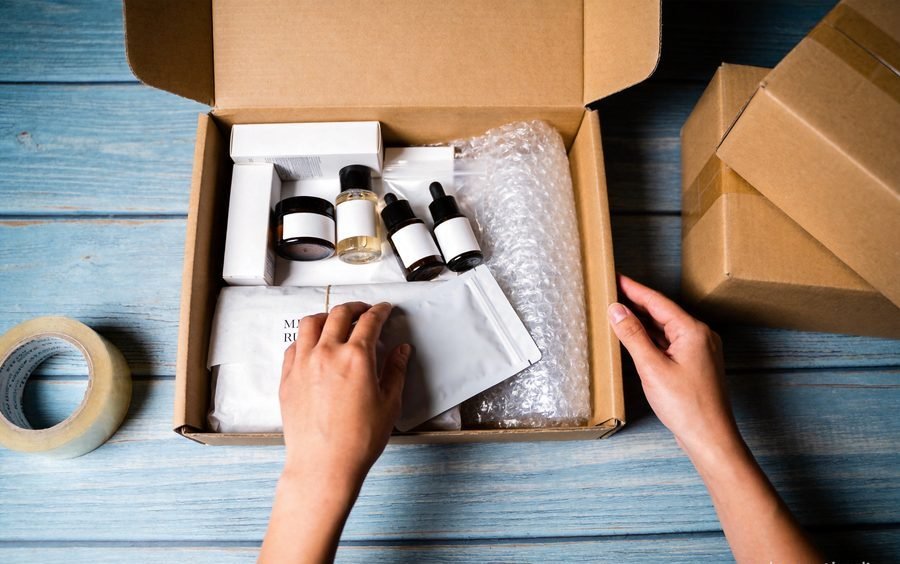
Practical branding layers, from lightest to heaviest: a logo on the product itself; a printed or woven label; a custom header card or hang tag; a printed inner box; a printed retail carton with your design; and finally instruction sheets or multilingual inserts. Each layer has its own minimum and lead time. Our recommendation for a first private label run is product logo plus header card or inner box — enough branding for retail presentation, without committing to a full packaging print run.
Samples and Pre-Production Checks
Never approve a private label order from a screen proof alone. A pre-production sample shows the actual print method on the actual material — logo registration, colour fastness, label attachment, and packaging fit. Photograph and approve the sample in writing; it becomes the inspection reference for the production run. If artwork will run in several colours or languages, check each variant at sampling stage. The sample fee is small relative to the cost of a misprinted production run.
Quality Control for Private Label Orders
Inspection for private label orders checks two layers: the product and the branding. Product checks follow the standard AQL method against the approved sample. Branding checks verify logo placement and registration, print adhesion, label accuracy, barcode scanning, and packaging assembly. A barcode that does not scan or a label with the wrong variant marking is a functional defect, not a cosmetic one — it can stall a retail receiving process. Both layers appear in the photo report you receive before balance payment.
Compliance and Documentation
Branded goods attract more documentation requests than unbranded ones, especially from retailers. Depending on the destination market, expect requests for material test reports, product safety documentation, country-of-origin marking, and care or use instructions in the local language. The brand owner — you — normally holds regulatory responsibility in the destination market, so confirm requirements before artwork is finalised, not after production. We coordinate with factories to obtain the correct documentation set for your destination.
Private Label Lead Times
A private label order runs a few weeks longer than an unbranded one, almost entirely at the front end: artwork preparation, printing setup, and branded sampling. Production speed itself is unchanged. The practical schedule is: artwork approval, then sample, then production, then inspection, then dispatch. Rushing artwork approval is where most delays originate — a change requested after printing plates are made restarts the cycle. Build your launch calendar backwards from a realistic artwork approval date, not from the production date.

Payment Terms for Branded Orders
Branded orders follow standard trade terms: deposit to open the slot, balance against shipping documents. Two private-label specifics worth knowing. First, printing setup fees are usually due with the deposit, since plates and tooling are made up front. Second, because branded goods are worthless to anyone but the brand owner, some factories ask for a slightly higher deposit on first orders. A written order confirmation covering specification, artwork version, MOQ, unit price, and lead time protects both sides.
How LIUHAO GLOBAL Supports Private Label Buyers
We support private label buyers at whichever stage you are stuck at: selecting a base product from audited factories, briefing artwork to factory print teams in their language, running branded sampling, inspecting production, and consolidating your branded goods with other lines into one shipment. Buyers who already have artwork usually engage us for factory selection and inspection; buyers starting from scratch use the full programme. Send your category and branding intent via the contact page and we will map the options.
Common Private Label Mistakes
The classic mistake is over-branding the first order — full custom packaging before the product has proven demand, leaving you with a warehouse of printed boxes for a slow seller. The second is weak artwork handover: sending a photo of a logo instead of vector files, guaranteeing a blurry print. The third is skipping the branded sample. Each of these is cheap to prevent and expensive to fix. Start light, prove sales, then deepen the branding investment on reorder.
Private Label and Repeat Orders
The economics of private label improve sharply on reorder. Printing plates exist, artwork is approved, the factory holds your specification — so reorders run faster, at lower setup cost, often at a better unit price tier. This is why we document every approved artwork version and sample: it makes reorder a one-line instruction rather than a new project. For background on how such programmes sit inside broader supply chains, see this overview on Wikipedia.
Global Shipping and Import Notes
Retail channels worldwide reward private label programmes: margins are strong, consumer preference for store brands is growing, and consolidated freight from China keeps restocking fast. A trial branded run can reach shelves quickly and be replenished within weeks if it sells. We ship branded programmes across the region and can structure the first order small and the reorder cadence fast, which is exactly the shape a new private label brand needs.
Choosing a Base Product to Brand
The base product decides most of your private label economics, so choose it with the same rigour as the branding. Good candidates share four traits: stable demand, few regulatory complications, a clear quality range you can position in, and packaging that suits your retail channel. We shortlist base products from audited factories, quote two or three candidates side by side, and let the numbers pick the winner before any artwork is briefed.
Artwork Preparation Checklist
Before artwork goes to the factory, check: logo in vector format; colour codes specified for the print method, not just for screens; the exact print position and size on a dimensioned drawing; text proofread in every language that will appear; and regulatory text — country of origin marking, material symbols, warnings — confirmed for the destination market. Artwork approved after this checklist rarely needs a second sampling round; artwork approved without it usually does.
Retail-Ready Packaging Notes
Retail-ready packaging is a bigger commitment than it looks: printed boxes carry their own printing minimum, add per-unit cost, and lengthen lead time. For a first branded run, consider a middle layer — a printed header card or sleeve over a standard inner box — which delivers shelf presence at a fraction of the commitment. Move to full printed cartons once the product has proven sell-through, and reuse the approved artwork files to shorten the second round.
Multilingual Labelling
If your market is multilingual, decide labelling language strategy at artwork stage, not after printing. Common options: one artwork with several languages on the same label, separate labels per market, or a neutral label plus multilingual inserts. Each has different minimums and compliance implications — some product categories mandate specific languages for warnings and care instructions. We check the destination requirements with the factory before artwork is finalised.
How Reorders Work for Branded Goods
Branded reorders run faster and cheaper than the first run: printing plates exist, artwork is approved, and the factory holds the exact specification. In practice a reorder is a one-line instruction referencing the previous order number and approved sample. What changes is quantity tier — reorder volume usually earns better unit pricing, which is where a private label programme starts compounding: same brand, better margin, shorter cycle.
What to Send Us for a Branded Quotation
For a branded quotation, send: the product category or reference product, target quantity, your logo files (or a note that you need artwork support), packaging intent, and destination market. We return a quotation with each branding layer priced separately — product, printing, packaging — so you can adjust the mix to your margin. Reach us via the contact page; artwork support is part of the service, not an extra.
Typical Order Timeline
A typical private label order moves through six stages:
- Product and branding brief — base product, logo files, and packaging direction.
- Artwork and quotation — branding layers quoted separately from the product.
- Branded sample approval — printing and packaging approved in writing.
- Deposit and production — plates made, order enters the factory schedule.
- Final inspection — product and branding checked against the approved sample.
- Balance payment and shipping — documents prepared, goods dispatched.
Cost Factors in a Private Label Quote
These factors move a quotation most:
| Cost factor | What it changes |
|---|---|
| Quantity tier | Unit price drops at volume breakpoints |
| Material grade | Higher grades raise cost and durability |
| Customisation level | Printing, tooling, and structural changes add setup cost |
| Packaging format | Retail-ready packaging costs more than export packing |
| Inspection and testing | AQL inspection and lab tests are quoted separately |
| Freight mode | Sea, air, or courier changes landed cost sharply |
| Incoterms | FOB, CIF, and DDP shift different costs to buyer |
| Exchange rate | Quotes are pegged to a rate and validity date |
Common Private Label Mistakes
Frequently Asked Questions
Do I need my own brand registered before starting?
You need the right to use the brand name and logo on your goods. Formal trademark registration in your selling market is strongly recommended before a private label run — we flag it as a pre-production checkpoint for every branded programme.
What files do I need for my logo?
Vector artwork — AI, EPS, or print-ready PDF. A photo of a logo or a website screenshot cannot be printed cleanly. If you only have a sketch, our team briefs a factory designer to redraw it.
Can private label products be sold on marketplaces?
Generally yes, subject to each platform’s rules and the destination market’s product regulations. Confirm documentation requirements for your category before artwork is finalised.
How much more does private label cost?
It depends on the branding layers. Logo printing on a stock product adds modestly; full custom packaging adds a printing minimum and per-unit cost. We quote each layer separately so you decide the mix.
Can I mix branded and unbranded goods in one shipment?
Yes. Consolidation programmes routinely combine branded lines, unbranded stock, and goods from several factories into a single shipment with one document set.
Every quotation we issue lists the specification, quantity tiers, unit price, lead time, and packaging format on one page, so nothing depends on memory or verbal agreement. Changes requested after production starts are documented and re-quoted, which keeps the commercial record clean on both sides.
Our team works across dozens of product categories and factory relationships at any given time. That breadth matters when a buyer needs alternatives quickly: if one factory cannot meet a requirement, we usually know two others that can, and we compare them on like-for-like specifications rather than on headline prices.
Documentation discipline separates a smooth import from a stalled one: confirm specifications in writing, keep the approved sample as the reference, and insist on an inspection report before balance payment. These three habits prevent most of the disputes we are asked to resolve.
The strongest branding decisions are reversible ones. A logo on a stock product can be changed next season; a warehouse of printed cartons cannot. Sequence your branding investment so each step is justified by the sales data from the one before it.
Artwork files are handled like production tooling, because that is what they are. Each approved version gets a file name and a date, and the factory prints from that exact file. Superseded versions are archived, never deleted — rebrands and packaging refreshes often reuse elements from earlier rounds, and the history saves redesign cost.
Colour proofing is the step buyers most often skip and most often regret. Screens show colour in light; print methods render it in ink on material. A physical colour proof or a strike-off on the actual substrate is the only reliable reference, and it costs a fraction of a misprinted run. We insist on it for brand-critical colours.
Carton marking is part of the branding brief: shipping marks, carton labels, and barcode placement all affect how your warehouse and your customers receive the goods. Export cartons can carry your brand discreetly or stay neutral — both are valid choices, but they must be chosen at artwork stage, not discovered at delivery.
A private label programme is a long-term asset, not a one-off order. The strongest private label brands we support started with one proven product, a clean logo, and disciplined sampling — then expanded the private label range category by category as sell-through data came in.
Treat a private label programme as a portfolio: one proven product carries the brand, a second extends it, a third tests an adjacent shelf. Build the portfolio one reorder at a time and every step is funded by the last.
Related Guides and Next Steps
Related guides: our international shipping support and where LIUHAO GLOBAL is based. Browse the FAQ category for the full knowledge base, or request a quote via the contact page.