Quality & Compliance
At LIUHAO GLOBAL, quality compliance starts with clear product requirements, responsible supplier selection, and transparent communication.
Table of Contents
As a China sourcing and global supply partner, we work to help international B2B buyers explore suitable products and suppliers while considering quality, documentation, packaging, and applicable market requirements.

Our Quality Compliance Approach
Product quality is an important part of every sourcing project.
Before recommending sourcing options, we consider factors such as product specifications, materials, workmanship, functionality, packaging, supplier capabilities, order quantity, and customer requirements.
The specific quality requirements depend on the product, supplier, destination market, and purchasing needs of each project.
Supplier Evaluation

We aim to work with suitable manufacturers, factories, and suppliers in China based on the requirements of each sourcing project.
Supplier evaluation may consider:
- Product capabilities
- Production capacity
- Quality requirements
- Minimum order quantity
- Pricing
- Packaging capabilities
- Customization options
- Communication
- Available product and business documentation
The level of supplier evaluation depends on the specific project and customer requirements.
Product Samples

For many products, samples can be an important part of the sourcing process.
Samples may allow buyers to review:
- Materials
- Product specifications
- Workmanship
- Appearance
- Functionality
- Packaging
- Labeling
Where appropriate, product samples can be reviewed before larger purchasing decisions are made.
Documentation & Compliance

Different products and destination markets may have different requirements relating to product safety, labeling, testing, packaging, import documentation, and other applicable regulations.
The documents available for a product depend on the supplier, product category, destination market, and project requirements.
Where relevant, we can communicate customer requirements to suppliers and coordinate available product or supplier documentation.
Certificates and Test Reports
Certificates, test reports, licenses, and other compliance documents should always be relevant to the specific product, supplier, market, and applicable requirement.
Any documents presented during a sourcing project should be reviewed carefully for accuracy, scope, validity, and applicability.
LIUHAO GLOBAL does not represent a supplier’s certificate as its own certificate.
Where third-party testing or certification is required, customers should verify the applicable requirements for their destination market and product category.
Packaging & Product Information

Packaging can affect product protection, shipping, product presentation, labeling, and branding.
Depending on the project, buyers may require:
- Standard packaging
- Customized packaging
- Private-label packaging
- Product labels
- Instruction materials
- Branded inserts
Packaging requirements should be confirmed before production begins.
Destination Market Requirements

Product requirements can vary between countries and markets.
Buyers are responsible for understanding the laws, regulations, import requirements, labeling requirements, certification requirements, and other applicable obligations for their destination market.
LIUHAO GLOBAL can help communicate sourcing and product requirements to suppliers and coordinate available documentation, but specific legal or regulatory compliance should be confirmed with the appropriate local authorities or qualified professionals.
Our Quality Compliance Process in 6 Steps
Every project follows the same quality compliance routine, scaled to the product and order size:
- Requirements review — we document product specifications, quality expectations, and destination market requirements before sourcing starts.
- Supplier screening — potential suppliers are evaluated on capability, capacity, pricing, and documentation.
- Sampling — samples are checked against agreed specifications where the project allows.
- Documentation — certificates and test reports are collected and matched to the actual product and destination market.
- Production coordination — packaging, labeling, and product information are confirmed before production begins.
- Order follow-up — we track the order and keep communication transparent until shipment.
Many buyers also ask about internationally recognized frameworks such as ISO 9001 quality management standards. Where suppliers hold such certificates, we help you review whether the certificate scope matches your product.
Want to see this process in practice? Read real examples in our case studies or contact our team about a specific product.
Our Commitment
Our goal is to make international sourcing more organized, transparent, and reliable.
We focus on clear communication, suitable supplier coordination, product requirements, and responsible sourcing practices.
We believe long-term business relationships are built through reliability, transparency, product quality, and professional service.
Quality Compliance Checks at Every Production Stage
Effective quality compliance is not one inspection at the end; it is a series of checkpoints that start before the first component is cut. At raw material intake, we verify material certificates and gauge incoming lots. During inline production, our inspectors sample output at 20, 50, and 80 percent completion to catch drift while corrections are still inexpensive. Before packing, a final random inspection under the AQL standard confirms function, appearance, quantity, and carton markings. This staged approach is what turns quality compliance from a report into a result.
Each stage produces written evidence. Photos, defect counts, measurements, and pass or fail judgements are compiled into one report you can forward to your customers or insurer. Factories respect buyers whose quality compliance process is documented, because the standard is objective and cannot be argued away. Over time, this documentation also builds a supplier scorecard that tells you which factories earn bigger orders and which need supervision.
Product Testing and Certification Support
Many markets require lab testing before goods can legally be sold, and quality compliance planning should include it from day one. We confirm which standards apply to your product in the destination market, check the certificates factories claim to hold, and commission accredited lab tests where gaps exist. Typical examples include safety and EMC testing for electronics, stability and microbial testing for cosmetics, and mechanical and chemical testing for toys and children’s products. We only accept reports from accredited laboratories, because a cheap unaccredited test is not a savings; it is a delay waiting to happen.
When a product fails a test, we sit with the factory to find the root cause, agree a corrective action plan, and re-test until the result passes. This loop is part of our quality compliance service, not an extra. We also keep test reports on file so repeat orders can reference them, reducing both cost and lead time.
Common Defects Our Quality Compliance Team Catches
After thousands of inspections, certain failure patterns repeat across categories. In consumer goods, the most common are colour deviation against the approved sample, poor printing or logo placement, weak stitching or bonding, missing accessories or manuals, and incorrect barcodes. In electronics, battery capacity below specification and unsafe charging behaviour appear far too often. Cosmetics bring leakage, underweight filling, and label non-compliance. Catching these before shipment is the cheapest quality compliance money you will ever spend, because a defect fixed in the factory costs a fraction of one handled by customer returns.
How to Read a LIUHAO Quality Compliance Report
Every report we issue follows the same structure so you can read it in minutes. The header shows order details, factory, inspector, date, and the sampling plan used. The body lists each check point with a pass, fail, or observation mark, supported by photos with reference tags. The defect summary separates critical, major, and minor findings and states the overall result against the agreed AQL limits. The conclusion page gives our release, rework, or reject recommendation in plain language. If a term is unclear, your coordinator will walk you through the report on a short call, because a quality compliance report only has value when you can act on it.
Quality Compliance Pricing and Scheduling
Inspections and audits are quoted per man-day based on factory location, with all travel included. Most single-visit inspections complete in one man-day and are booked with two to five days notice, longer during peak season before Chinese holidays. Testing costs depend on the standard and the laboratory, and we pass lab invoices through at cost. When you plan a project, budget quality compliance as roughly a small single-digit percentage of order value; the exact figure depends on inspection frequency and testing scope, and we will state it before any work begins.
When Quality Compliance Checks Fail
A failed inspection is not the end of an order; it is the beginning of a correction. Our first step is always evidence: we document the failures, classify them, and send the report to you and the factory the same day. Then we negotiate a written rework plan with a completion date and a free re-inspection written into the arrangement. If the factory cannot or will not correct the issues, we help you enforce the contract terms, including cancellation and refund claims where justified. Protecting your money is the final purpose of every quality compliance step we run.
Quality Compliance Standards We Work To
Our quality compliance work follows recognised international standards so results are objective and comparable. Inspections use the ISO 2859-1 sampling standard, which most buyers know as AQL; typical consumer goods run at 2.5 for major defects and 4.0 for minors, with critical defects set to zero acceptance. Product-specific checks reference the standards your market enforces, from EN and CE requirements in Europe to FCC rules in the United States and applicable GB standards for goods sold inside China. Factory audits assess quality systems along the lines buyers already know, covering organisation, incoming control, process control, and traceability. When you and the factory agree on the standard up front, quality compliance stops being an opinion and becomes a measurement.
Factory Audits as Part of Quality Compliance
An inspection checks products; an audit checks whether the factory can make them consistently. Our audit report covers legal status, production capacity, equipment condition, staff organisation, quality records, and social compliance basics. We look at how the factory controls its own suppliers, how it handles nonconforming output, and whether the workshop you toured is the one that will actually run your order. Many quality compliance disasters trace back to subcontracting nobody disclosed, so audits pay special attention to where work really happens. For new suppliers, we recommend an audit before the first deposit; for established ones, a refresh each year is usually enough.
Quality Compliance for Small Orders
Small buyers often assume quality compliance is only for container-scale orders, but every check we run scales down. A sample check with photos costs less than a dinner and prevents most specification surprises. A single pre-shipment inspection on a five-hundred-unit order pays for itself the first time it catches a misprint that would have been unsellable. Testing can be scoped to exactly the standards your channel checks, not the full suite. Whatever your order size, ask us for the lightest quality compliance plan that still protects it; protecting small orders is how we earn the big ones that follow.
Build Quality Compliance Into Every Order
The cheapest quality compliance system is the one you use from the first order: an approved golden sample, a written specification, an inline check, and a final inspection. Our team can set up that framework for you in a single project and hand you the templates for reuse. Once the habit is in place, each new product starts protected instead of hoping for the best. Talk to us about your current orders and where the risks sit, and we will propose the checkpoints that fit your budget and delivery dates.
Packaging and Labelling Checks
A product can pass every functional check and still fail at the retailer for packaging reasons, so our inspections cover the box as seriously as the goods. We verify carton strength and internal protection, check that polybags carry the required suffocation warnings where the destination market demands them, and confirm that barcodes scan on the first pass. Label checks cover language requirements, ingredient or material declarations, country of origin marking, and importer details where applicable. We compare every printed element against the artwork you approved, because a wrong colour on a carton is a discount waiting to be demanded, and a missing warning label can block an entire shipment at customs.
Pre-Shipment Documentation Review
Paperwork failures cost as much as physical ones. Before any container leaves, we review the commercial invoice, packing list, and any certificates the destination requires, checking that descriptions, values, and quantities agree across documents. Where a certificate covers a factory rather than a product, we verify it is current and scoped correctly. For regulated categories, we confirm test reports reference the exact model and batch being shipped. Half a day of document review routinely saves weeks of demurrage, and it closes the loop between inspection findings and what customs actually sees.
Quality Metrics That Matter to Buyers
We report defects in the units buyers use to make decisions: first-pass yield at final inspection, defect rates by category, on-time shipment percentage, and corrective action closure time. Those four numbers, tracked order over order, tell you more about a supplier than any audit certificate. Our clients receive them in every project summary, and we use the same numbers internally to decide which factories get more of your work. Measurement is the quiet half of quality work, and it is the half that compounds.
How We Train the People Who Check Your Goods
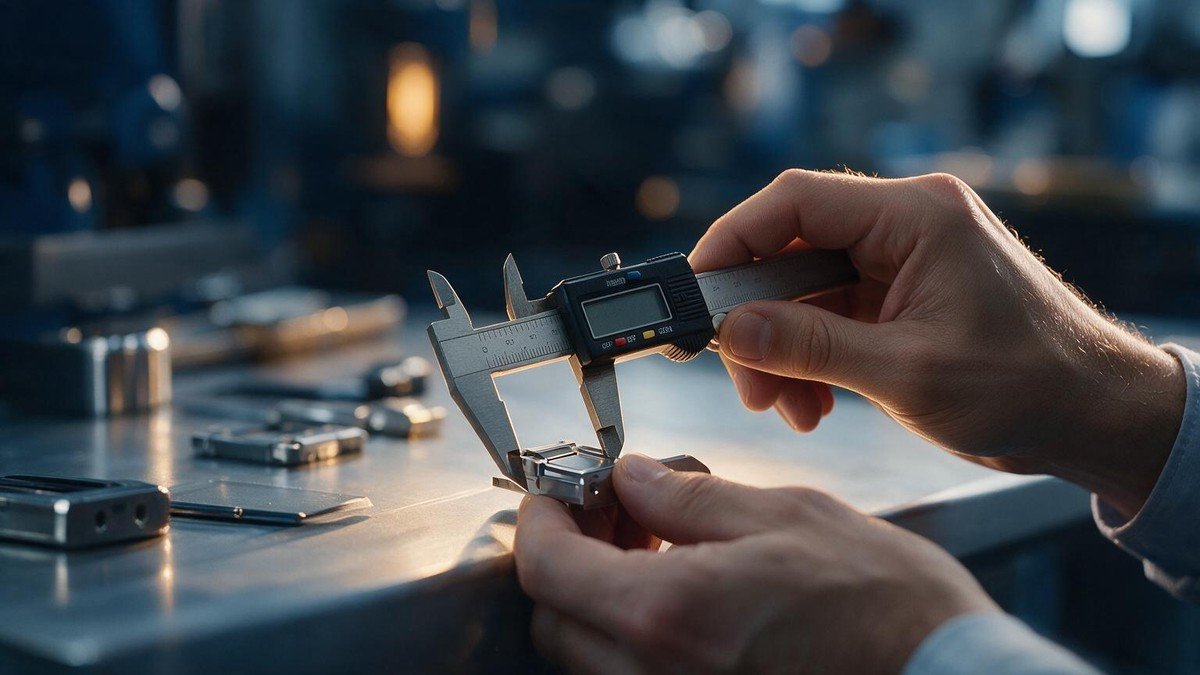
Inspectors on our network pass a structured onboarding that covers reading engineering drawings, using calipers and gauges correctly, photographing evidence that stands up in a dispute, and writing reports a buyer can act on without a phone call. Every new inspector shadows at least five live inspections before signing reports alone, and their first ten solo reports are reviewed by a senior checker. We refresh training each year because inspection standards, packaging rules, and buyer expectations all move. When you read one of our reports, you are reading the work of someone who was taught that an unclear photo is a missed defect.
What Happens When an Inspection Fails
A failed inspection is not the end of the order; it is the start of a documented correction loop. The report isolates the defect, the affected quantity, and the batch range, then the factory receives a written correction request with a deadline. We re-check the corrected units under the same checklist, and only goods that pass a fresh inspection move to booking. If the factory cannot correct in time to meet your landing date, you decide between waiting, shipping the passing portion, or cancelling the affected batch, and we present each option with its cost and timeline consequences written out. Nothing ships on a promise after a failure; everything ships on a passed re-inspection.
Why Buyers Keep Coming Back to This Page
Most buyers arrive here after a bad experience elsewhere: goods that looked nothing like the sample, a certificate that turned out to belong to another factory, or a shipment where nobody photographed anything before it left. This page exists so you can see, in advance and in writing, exactly which checkpoints your order will pass through and who signs each one. Bookmark it, send it to your own team, and hold us to every line on it.
Need Product or Compliance Information?
If you are looking for a specific product, supplier, certificate, test report, packaging requirement, or compliance document, contact LIUHAO GLOBAL with your product details and destination market.
We will explore suitable sourcing options and available supplier information according to your requirements.
One Partner. Multiple Categories. Global Supply.